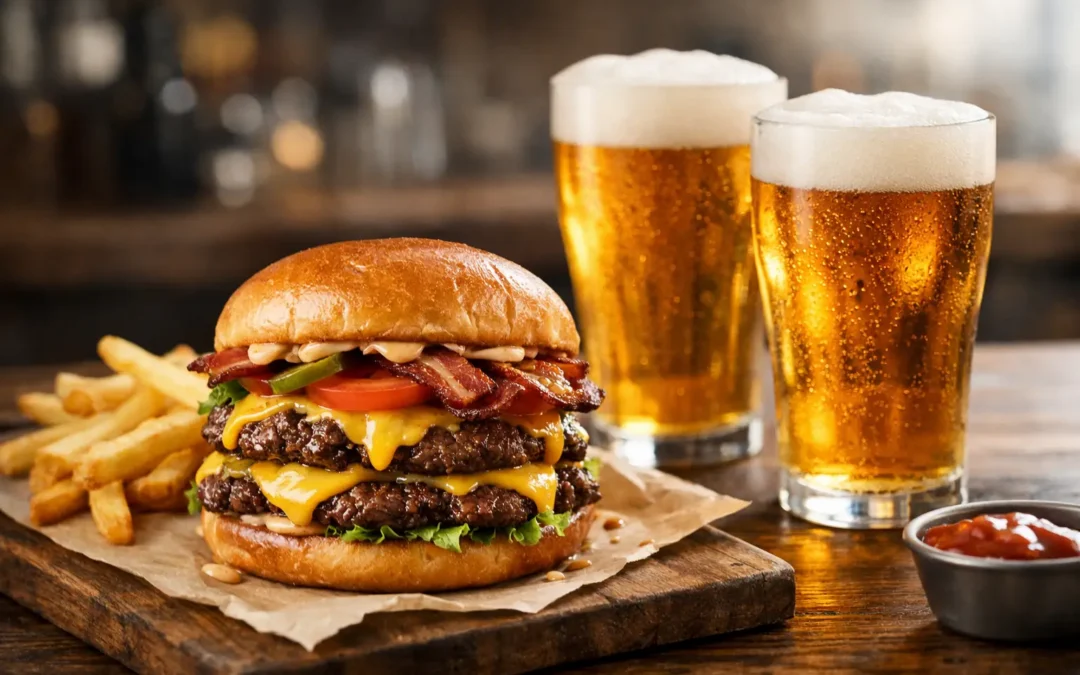
A great smash burger gives you a lot to work with fast – crispy edges, rich beef, melted cheese, soft bun, maybe a little pickle snap or sauce on top. That is exactly why learning how to pair smash burgers with beer is worth doing well. The right beer does not just sit next to the burger. It sharpens the crust, cools the fat, and makes the whole meal taste more like itself.
Smash burgers are not the same as thick pub burgers, and they should not be paired the same way. A thicker burger often leans heavier and slower, with more chew and more concentrated beef in each bite. A smash burger is about contrast. You get browned edges, juicy center, and a quicker, more craveable bite. That means your beer should usually bring lift, carbonation, and a clean finish rather than extra weight.
How to pair smash burgers by flavor, not just style
The easiest mistake is choosing beer by habit. IPA with burger sounds safe, but it is not always the best call. Hops can work beautifully with a burger, but they can also bully softer flavors like American cheese, grilled onions, or a buttery bun. Start with the burger in front of you, then match the beer to the strongest flavor on the plate.
If the burger is simple, the pairing should be precise. If the burger is loaded, the pairing should be strategic. Think about four things: fat, salt, char, and toppings. Fat wants carbonation or bitterness. Salt loves crisp lagers and pale ales. Char can handle roast, bitterness, or a little malt sweetness. Toppings change everything.
The classic cheeseburger pairing
A straightforward smash burger with American cheese, pickles, onions, and burger sauce usually pairs best with a clean lager or a balanced blonde ale. This is the kind of burger where refreshment matters as much as flavor matching. The beer should reset your palate between bites so the next mouthful tastes just as good as the first.
A lager works because it stays out of the way while doing the hard job. Carbonation cuts through the beef and cheese, and the crisp finish keeps the meal from feeling greasy. A blonde ale can do something similar with a little more softness and bread-like malt character, which makes sense if the bun is especially toasty or the burger leans slightly sweet from onions or sauce.
If you want one of the safest, most crowd-pleasing answers to how to pair smash burgers, start here. A classic cheeseburger and a crisp, easy-drinking beer rarely miss.
Pairing burgers with bacon, onions, and richer toppings
Once you add bacon, caramelized onions, or a heavier sauce, the burger gets deeper and sweeter. This is where amber-leaning beers, cream ales, or malt-balanced pale ales can shine. You need enough flavor to stand up to the toppings, but not so much that the whole thing turns heavy.
Bacon adds smoke and salt. Caramelized onions add sweetness. A cream ale can bridge both without making the meal too dense, because it has a smooth body with a clean finish. A malt-balanced pale ale gives you a little hop bitterness to trim the fat, plus enough backbone to stay present.
This is also where an IPA can work if it is not aggressively bitter. The key is moderation. Too much bitterness next to sweet onions can create a sharp, lingering clash. A more balanced IPA brings citrus or pine that freshens the burger instead of fighting it.
How to pair smash burgers with spicy toppings
Jalapenos, pepper jack, hot sauce, and chili crisp ask for a different approach. When heat enters the picture, bitterness can feel more intense. That means the hop bomb you love on its own may come off harsher with a spicy burger than you expect.
In most cases, a lighter, smoother beer is the better move. Blonde ales, light lagers, and cream ales help cool the spice while keeping the burger lively. If the burger has actual sweetness built in – say a sweet-spicy sauce – a beer with a gentle malt note can round the edges nicely.
Sour ales can also be a smart call, but this depends on the burger. If the spice is bright and peppery, a tart beer can be refreshing. If the burger is already acidic from pickles, hot sauce, and mustard, adding a sour can push it too far. Good pairing is not about chasing intensity. It is about balance.
Matching beer to the cheese on your smash burger
Cheese changes the pairing more than people think. American cheese melts into the beef and adds creaminess without much sharpness, which is why lagers and blonde ales work so well. Cheddar brings more bite and can handle more hop character. Swiss or provolone tend to call for cleaner, subtler beers that let the burger stay in control.
Pepper jack is a special case because it adds both richness and heat. A crisp lager still works, but a cream ale often works better because it softens the spice without muting it. Blue cheese, if you go that route on a burger, needs a beer with confidence. A stout or stronger ale can be a fit, but now you are moving into a more intense pairing that is not always ideal for a classic smash burger experience.
That is the bigger point. Smash burgers are built on speed, crust, and balance. They usually pair best with beers that keep that energy intact.
When an IPA is the right choice
IPAs get paired with burgers all the time for a reason. Hops can cut through fat, bitterness can refresh the palate, and citrus notes can brighten beef and cheese. But not every smash burger wants an IPA.
Choose IPA when the burger has enough punch to meet it. Sharp cheddar, grilled onions, bacon, pickles, and a heavier sear can all hold up well. If the burger is simpler or more delicate, a big IPA may steal the show.
This matters in a brewpub setting because people often order their favorite beer first and food second. There is nothing wrong with that, but if you are asking how to pair smash burgers well, the better move is to match intensity. Let the burger and beer play on the same level.
When darker beers work
A stout with a smash burger can be excellent, especially if the burger includes bacon, charred onions, barbecue sauce, or a sharper cheese. Roast flavors echo the crust on the patty, and the fuller body can make the meal feel richer and more winter-friendly.
Still, darker is not always better. A dry stout is usually a smarter pick than a sweet one, because sweetness can make the burger feel heavier than it needs to. If the burger is already rich, a sweeter stout may turn a great combo into a one-and-done meal.
Porters and stouts are best saved for burgers with bold toppings or colder-weather cravings. For everyday smash burger pairings, lagers, blonde ales, pale ales, and balanced IPAs tend to carry the day.
Fries, sauces, and the full plate matter too
A burger pairing does not happen in isolation. Fries add salt and texture. Ranch, aioli, ketchup, mustard, and house sauce all tilt the beer in different directions. More salt usually makes beer taste smoother and more refreshing. More sweetness in the sauce can make bitter beers taste sharper.
If you are ordering a full pub meal, think about the plate as a whole. A crisp lager is often the best all-around choice because it works with burger, fries, and dipping sauces without forcing any one flavor too hard. That is one reason these pairings are such a reliable taproom favorite.
At South Park Brewing, that kind of pairing logic is part of what makes a smash burger and house beer feel like the right call instead of just an easy one.
A simple way to choose every time
If you want a fast rule, pair lighter burgers with cleaner beers and bigger burgers with bolder beers. Use carbonation to cut richness, bitterness to manage fat, and malt to support sweet or smoky toppings. Be careful with spice, because too much hop bitterness can turn heat into something sharper than you wanted.
Most of all, trust the structure of the smash burger itself. Those crisp edges, the soft bun, the melted cheese, the salty finish – they are asking for balance, not brute force. A good pairing should make you want the next sip and the next bite equally.
That is really the fun of it. Once you know what each topping brings to the table, pairing stops feeling fussy and starts feeling natural – just a better burger, a better beer, and a better reason to stay for one more round.