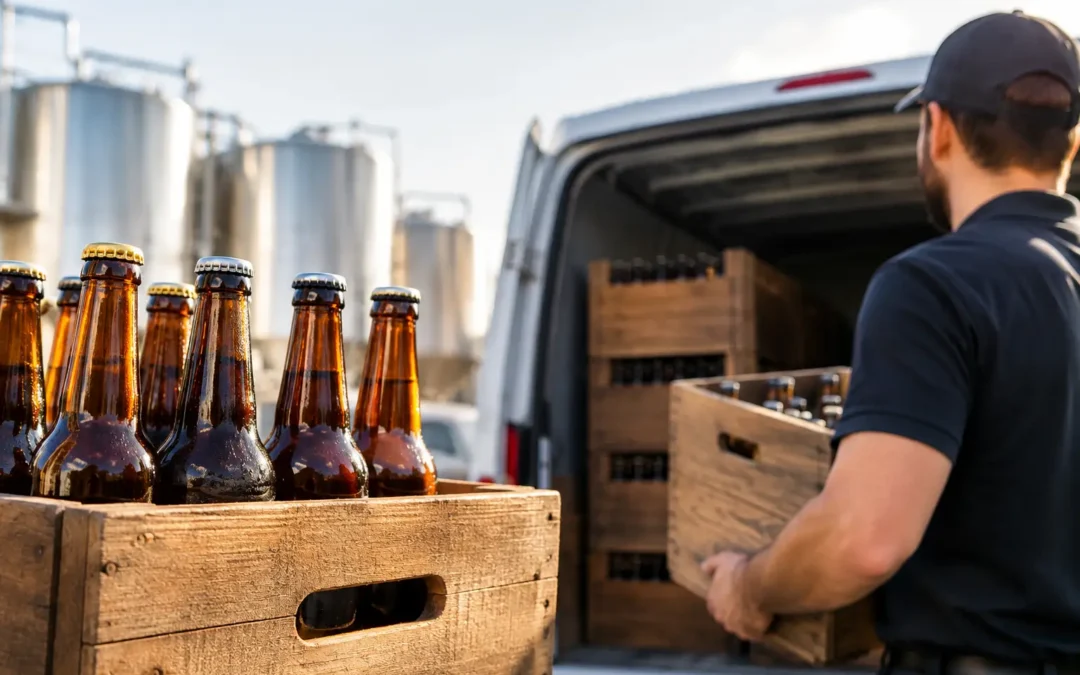
A fresh local lager in a neighborhood restaurant, a four-pack in a corner market, and a pint at the brewery may look like separate beer moments. They are all connected by beer distribution – the work that moves a brewery’s beer from the tank to the places people actually gather, shop, and celebrate.
For craft beer fans, distribution means more chances to find a favorite pale ale or try a new seasonal release without planning an entire afternoon around a brewery visit. For breweries, it is a careful balancing act between growing their reach, protecting quality, and keeping enough great beer flowing at the taproom. The best result is simple: fresh beer where people want it, with the local character that made it worth seeking out in the first place.
What Beer Distribution Actually Means
Beer distribution is the process of getting packaged beer or kegs from a brewery to retailers, bars, restaurants, and event venues. It includes far more than loading cases onto a truck. Beer needs to be stored correctly, delivered on schedule, tracked by package date, and represented well by the people selling it.
In Colorado and much of the United States, breweries generally work within a three-tier system. Producers make the beer, distributors move it through the market, and retailers sell it to the customer. The details can vary based on licensing, sales channels, and brewery size, but the central purpose is consistent: create a responsible, organized path from brewer to beer drinker.
That path can include draft kegs for a favorite local burger spot, cans for a grocery-store cooler, or mixed packs for a bottle shop. Each format has different needs. A keg requires clean draft lines and reliable rotation. Cans need cold storage when possible, attractive shelf placement, and enough turnover to avoid sitting around long past their prime.
Freshness Is the Real Standard
Beer does not benefit from being treated like a shelf-stable decoration. While certain strong, dark, or barrel-aged beers can develop interesting flavors over time, most hop-forward, crisp, and easy-drinking styles are at their best when they move quickly from brewery to glass.
That is why good distribution is not only about being available in more locations. It is about being available in the right locations. A brewery may be able to place beer in dozens of accounts, but that only helps if those accounts know how to store it, serve it, and reorder it. A slow-moving keg or a warm stack of cans can turn a bright, well-made beer into a disappointing first impression.
For customers, freshness is easy to support. Check package dates when they are available, buy beer from retailers with busy coolers, and keep your cans refrigerated once you bring them home. At a bar or restaurant, ask what is new on draft. That question helps staff point you toward fresh options, and it gives local beer a better chance to keep moving.
Why Distribution Matters to a Local Brewery
A taproom is still the heart of many craft breweries. It is where a brewer can pour a brand-new release, hear immediate feedback, pair beer with food, and welcome regulars by name. Distribution does not replace that experience. It extends it.
When a brewery sells beer outside its own walls, it can reach someone planning a backyard cookout, stocking up before a mountain weekend, or meeting friends at a restaurant across town. Those moments build recognition. A customer who enjoys a can at home may later visit the taproom for a flight. A guest who finds a great draft pour with dinner may become the person asking for that beer at their usual neighborhood spot.
There is a financial side, too. Distribution can create additional revenue streams and help breweries build demand beyond a single location. But it comes with real costs: packaging, warehousing, sales support, delivery logistics, marketing, and margins shared across the route to market. Bigger reach is not automatically better. A thoughtful local footprint can be more valuable than chasing distant shelves that are difficult to service and slow to turn.
The Difference Between Draft and Packaged Beer
Not all beer distribution works the same way, and the package changes the experience.
Draft beer gives bars and restaurants a chance to present a brewery’s beer at its most social. A well-poured pint can introduce a customer to a new style, especially when it is paired with a smash burger, wings, or a table full of friends. Draft also lets breweries offer rotating selections in smaller, more flexible quantities. The trade-off is that every part of the draft system matters. Temperature, line cleaning, gas balance, glassware, and staff knowledge can all affect the final pour.
Packaged beer gives customers convenience. Cans travel easily to patios, campsites, game nights, and refrigerators at home. They also allow retailers to stock multiple styles at once, making it easier for shoppers to explore. Packaging protects beer well, but it cannot solve every problem. A can that has spent too long in a hot stockroom or at the back of a cooler is not getting the same chance as a fresh one.
The smartest brewery approach often uses both. Draft creates an immediate, memorable experience. Packaged beer builds everyday access.
What Makes a Great Distribution Partner
A distributor is more than a delivery service. The best partners understand the brewery’s portfolio, know which accounts fit each beer, and care about the customer experience after the sale.
That matters when a brewery makes a broad range of styles. A clean blonde ale may be a perfect fit for a casual restaurant with a busy patio. An imperial IPA may appeal to a specialty beer shop with customers looking for bold flavor. A tart sour or rich stout may shine as a limited release in an account that knows how to tell its story. Sending every beer to every location is rarely the answer.
Good communication is equally valuable. Breweries need clear information about inventory, delivery schedules, depleted stock, and market feedback. Retailers need reliable ordering, useful product details, and confidence that a keg or case will arrive as promised. When those relationships work, beer drinkers feel the benefit without needing to see the logistics behind it.
How Local Businesses Help Beer Travel Better
Retailers and hospitality teams play a major role in protecting local craft beer. They decide what gets featured, what gets refrigerated, what is rotated, and what staff members recommend when someone asks, “What should I try?”
A great account does not need a huge selection. It needs a thoughtful one. A few well-kept local options can be more exciting than a crowded cooler full of familiar labels. Restaurants can give local beer a natural home by matching styles to the food on the menu. A crisp lager can cut through a rich burger. A citrusy IPA can stand up to spicy flavors. A cream ale can be an easy first step for someone who usually orders something light.
For venues, the reward goes beyond a better beverage list. Local beer gives staff a real conversation starter and gives guests a stronger connection to the place they are visiting. It says the business pays attention to its community, not just its purchase orders.
Finding the Right Beer for the Occasion
Beer distribution gives people choices, but the best choice depends on the moment. Heading to a cookout? Look for easy-drinking cans that work from the first bite to the last. Planning a meal out? Ask what local beers are on draft and let the food guide the decision. Picking up a gift for a beer fan? A fresh seasonal release or a mixed pack can feel more personal than the usual standby.
There is also room for curiosity. If you normally reach for an IPA, try a lager from a local producer. If you tend to stick to lighter beer, a balanced blonde ale or cream ale might surprise you. Distribution makes that exploration easier because it brings more brewery personalities into familiar places.
For Colorado Springs beer drinkers, supporting local distribution can be as simple as choosing a nearby brewery’s can from the cooler, ordering a local tap at dinner, or asking a favorite retailer what just arrived. And when you want the source experience, South Park Brewing is ready with fresh pours, satisfying food, and a reason to make a night of it.
The next time you spot a local can or tap handle, treat it as more than another option on the shelf. It is an invitation to try something made close to home, kept fresh with care, and shared one good pour at a time.