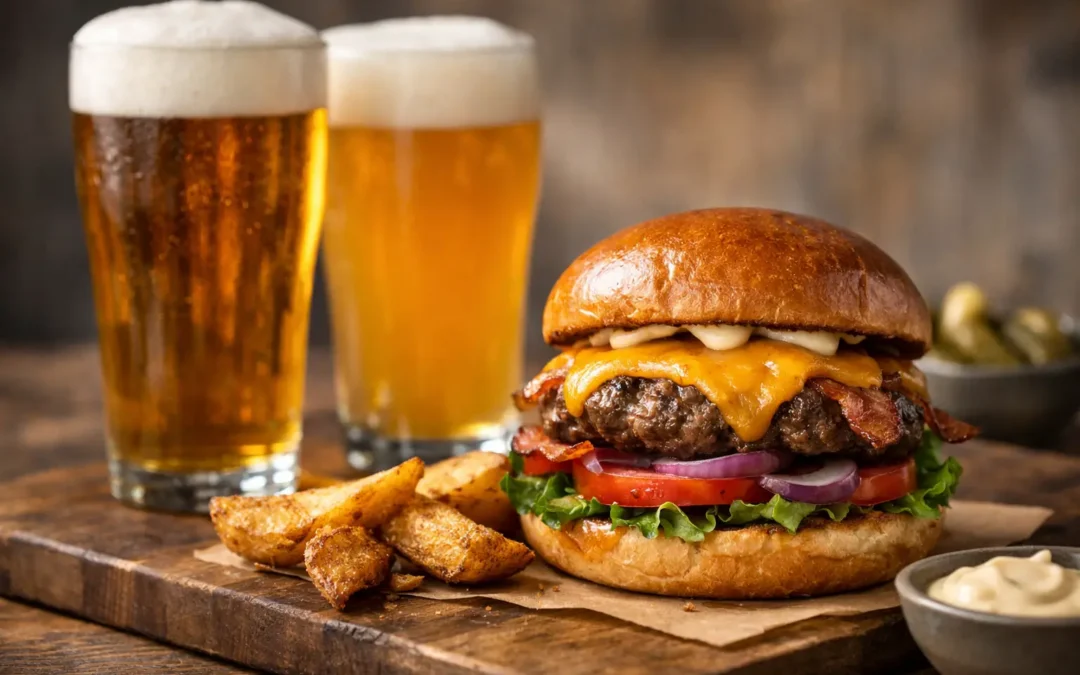
A great burger can carry a lot – beefy richness, melty cheese, pickles, char, bacon, onions, sauce. A great beer can do the same. The trick with beer and burger pairing is not chasing rules for the sake of rules. It is knowing what needs balance, what can handle contrast, and when the beer should cut through the burger instead of trying to compete with it.
That is why the best pairings usually start with the burger, not the beer. A simple smash burger with American cheese asks for something very different than a mushroom Swiss burger or a heat-heavy burger loaded with jalapenos. Once you know where the weight, salt, sweetness, and spice are coming from, the right pint gets a whole lot easier to choose.
What makes beer and burger pairing work
Burgers are rich by nature. Beef fat, toasted buns, cheese, and sauces all add weight, so beer often works best when it brings carbonation and enough bitterness or crispness to reset your palate. That first sip after a greasy, salty bite is where the whole pairing either clicks or falls flat.
There are a few forces at work. Carbonation scrubs the palate and keeps each bite from feeling heavy. Malt can echo toasted buns, caramelized onions, or a charred patty. Hops can brighten rich flavors, but they can also overwhelm a more delicate burger if they are too aggressive. Roasted notes can be fantastic with char, though they need a little care around spicy toppings.
This is also where people overthink it. You do not need a sommelier speech to pair a burger and a beer. You just need to know whether your burger is leaning classic, smoky, spicy, rich, or sharp.
Start with the burger build
If your burger is straightforward – beef, cheese, pickles, onion, maybe a house sauce – you have room to keep the beer classic too. Clean lagers, blonde ales, and cream ales tend to shine here because they let the burger stay center stage. They refresh without stripping away flavor.
If the burger gets heavier, the beer should usually get a little more assertive. Bacon, extra cheese, fried onions, and richer sauces call for more bitterness or malt depth. That does not always mean stronger alcohol. It usually means more presence in the glass.
Toppings matter as much as the patty. Swiss and mushrooms push a burger in an earthy direction. Blue cheese adds funk and salt. Barbecue sauce brings sweetness. Pickles and mustard sharpen the whole profile. You are not just pairing beer with beef. You are pairing beer with the full stack.
Best beer styles for classic burgers
For the classic cheeseburger, a lager is hard to beat. Crisp, clean, and lightly bready, it supports the beef without making the meal feel too heavy. If your burger has pickles, mustard, or onion, that snap from the lager keeps everything lively.
A blonde ale can be just as good when you want a little more body but still want an easygoing pairing. It brings soft malt character and enough refreshment to handle cheese and seared edges without stealing the spotlight.
Cream ales sit in a sweet spot too. They are smooth and approachable, with a rounder texture than a lager but still plenty drinkable. With a smash burger, especially one with American cheese and a toasted bun, that balance can feel just right.
IPAs with burgers – when they shine and when they do not
IPA is a popular burger beer for a reason. Hop bitterness can cut through richness, and citrusy hop character can wake up a burger loaded with bacon, sharp cheddar, grilled onions, or aioli. If your burger is big on savory flavor, an IPA often has the backbone to keep up.
But this is where “more hops” is not always better. A highly bitter imperial IPA can bulldoze a simple cheeseburger and make the meal feel harsher than it should. It can also push heat over the edge if your burger has jalapenos, hot sauce, or pepper-heavy seasoning.
So if you are pairing an IPA with a burger, think about intensity. A standard IPA works well with richer builds and smoky toppings. A bigger imperial IPA makes more sense when the burger is loaded and bold enough to match it. If the burger is simple and balanced, a lighter beer usually gives you a better meal.
Dark beer and burgers deserve more credit
A lot of people reserve stouts for dessert or colder weather, but dark beer can be excellent with the right burger. Roasted malt and charred beef can play off each other in a way that feels deep and satisfying without becoming too much.
A stout works especially well with burgers that bring smoke, bacon, caramelized onions, or barbecue sauce to the table. The beer’s roasted edge can mirror the grill flavors, while its fuller body stands up to heavier toppings. If there is a little sweetness in the stout, that can also soften salty or smoky elements nicely.
That said, not every dark beer is ideal. A sweeter stout can feel too dense next to a rich double cheeseburger. If the burger already has a lot of sweet sauce, the pairing may get heavy fast. This is one of those it-depends situations. Great pairing is not about choosing the biggest flavor. It is about avoiding a meal where every element piles on the same note.
Pairing beer with spicy burgers
Spicy burgers can be tricky. The instinct is often to reach for a hop bomb, but bitterness tends to amplify heat. If your burger includes jalapenos, pepper jack, chipotle mayo, or hot sauce, a smoother beer often performs better.
Lagers and blonde ales are reliable here because they cool things down and keep the meal refreshing. A cream ale can be especially nice if the burger has enough heat to need a softer landing. Sour ales can work too, but this is more situational. Their brightness can be great with spicy, tangy toppings, though very acidic beers may fight with pickles or tomato in a way that feels sharp rather than refreshing.
Toppings that change the pairing
Cheese is one of the biggest swing factors. American cheese melts into the burger and keeps things classic, which is why lighter lagers and blonde ales feel so natural with it. Cheddar gives you a little more sharpness and can welcome pale ales or IPAs. Swiss leans earthy, which often makes room for darker lagers, amber-leaning ales, or even a stout if mushrooms are involved.
Sauce changes everything too. A burger with barbecue sauce usually wants malt somewhere in the beer because sweetness and roast tend to get along. A mustard-forward burger can be fantastic with a crisp lager. Mayo-based sauces often ask for carbonation and bitterness to keep the richness in check.
Then there is bacon. Bacon broadens your options because it adds salt and smoke, which pair well with lagers, IPAs, and stouts depending on what else is on the burger. If bacon is the only extra, a lager still works. If it is part of a bigger, heavier build, you can step up the beer with confidence.
A simple way to choose at the table
If you want an easy way to handle beer and burger pairing without overthinking it, ask one question: do I want the beer to refresh the burger or match its intensity?
If you want refreshment, go crisp. Lager, blonde ale, and cream ale are the safest bets for classic burgers, salty fries, and a second round with friends. If you want a match in intensity, go bolder. IPA makes sense for richer, sharper, or smokier burgers. Stout fits when char, bacon, barbecue, or roasted flavors are part of the build.
This is also a good moment to trust your own habits. If you already know you like hop-forward beers, build your burger around that preference with cheddar, bacon, grilled onions, or a richer sauce. If you are more of a lager drinker, keep the burger cleaner and let the simplicity do the work.
At South Park Brewing, this is exactly why smash burgers and house-brewed beer make such a strong combo. The best pairings are approachable first. You should be able to sit down, order what sounds good, and end up with a meal where the burger tastes more like itself and the beer tastes even better after each bite.
The next time you are choosing between a crisp pint and something with more muscle, let the burger call the play. When the pairing feels easy, that usually means you got it right.