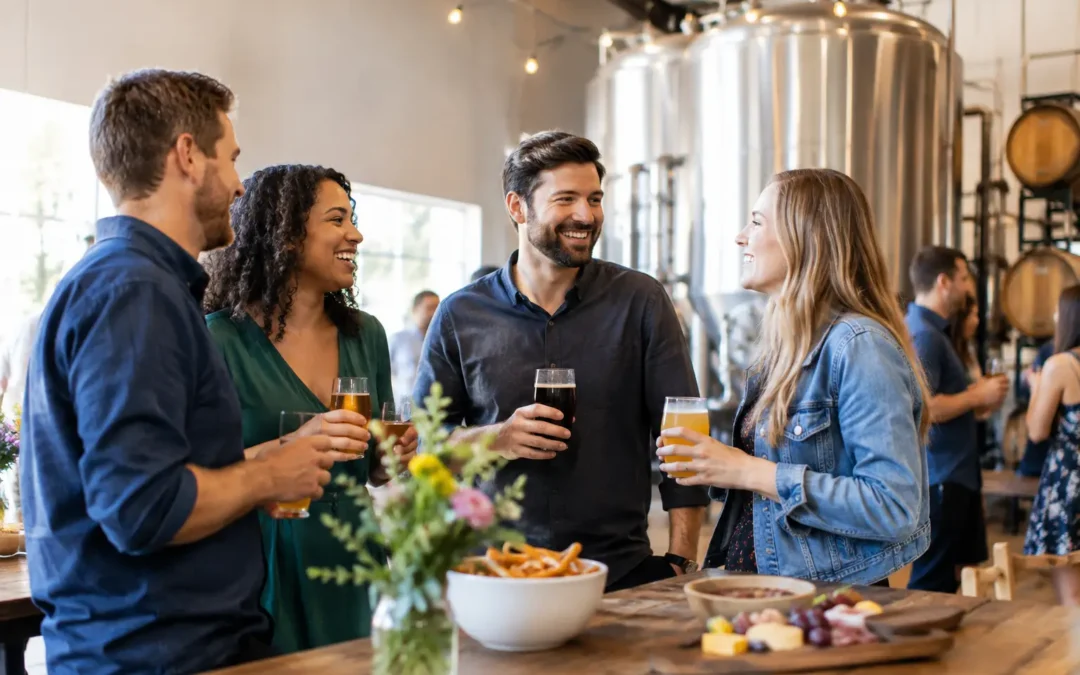
A brewery is a good fit when you want the celebration to feel easy, not overly staged. This brewery private event guide is for birthdays, work outings, rehearsal dinners, team wins, and any reason to get your favorite people around good food and fresh beer without turning the host into a full-time event coordinator.
The best brewery events have a little structure behind the scenes, then leave room for guests to settle in, order another round, and enjoy the people they came to see. The goal is not to control every minute. It is to create a gathering that feels generous, comfortable, and unmistakably yours.
Start With the Kind of Party You Actually Want
Before asking about dates or drink packages, get clear on the mood. A 20-person retirement toast needs something different than a 60-person company holiday gathering. A casual birthday with burgers and a few shared pitchers can work beautifully in a lively taproom. A client appreciation event may need a quieter section, a clear arrival plan, and more room for conversation.
Think about who is coming, when they will arrive, and what you want them to do once they are there. If the guest list includes beer fans, a tasting-focused format can be part of the fun. If it includes coworkers, families, or people who do not drink beer, food variety and nonalcoholic options matter just as much.
Also be honest about the energy level you want. A Friday night event has built-in buzz, but it may come with more taproom activity and tighter availability. A weekday happy hour or Sunday afternoon can feel more relaxed and may give your group more flexibility.
Brewery Private Event Guide: Questions to Ask Early
A private event is much easier to plan when expectations are clear from the first conversation. Ask whether your group will have a fully private room, a reserved section, or a designated group of tables within the main taproom. Each option has a different feel and a different price point.
You will also want to understand capacity, minimum spend, time limits, deposits, and cancellation terms. Those details are not the glamorous part of planning, but they prevent surprises later. If your headcount is still moving around, ask when the venue needs a final number and whether you can build in a small buffer.
Food service deserves the same attention. Some groups prefer guests to order individually, which keeps the menu flexible but can slow down service for a large crowd. Others do better with preselected food, shared appetizers, or a buffet-style spread. For a casual crowd, smash burgers, wings, fries, and shareable starters give people familiar options without making the event feel formal.
Ask about dietary needs before invitations go out. A good host does not need to create a separate menu for every guest, but it helps to know whether vegetarian, gluten-conscious, or nonalcoholic choices will be available. A brewery gathering should make everyone feel included, including the designated drivers and guests who simply prefer a soda, mocktail, or water.
Set a Budget That Matches the Guest Experience
The total event cost is more than the room fee, if there is one. Plan for food, drinks, tax, gratuity, optional decor, and any add-ons such as a custom dessert, printed menus, or a hosted bar. Decide early whether you are covering every tab, offering drink tickets, hosting the first round, or asking guests to purchase their own drinks.
A hosted bar feels generous, but it needs guardrails. You might set a per-person amount, offer a defined beer selection, or cover beer and nonalcoholic beverages while guests purchase cocktails separately if those are available. Drink tickets are especially useful for company events because they make the offer clear without requiring a long explanation at checkout.
Do not assume the most expensive option is automatically the most memorable. Guests tend to remember whether the food came out on time, whether they had a comfortable place to sit, and whether the room felt welcoming. A focused menu and a couple of well-chosen beers often land better than trying to provide every possible choice.
Build a Food and Beer Plan With Range
The strongest brewery event menus offer a little range without becoming a spreadsheet. Choose approachable options alongside something with more character. A crisp lager or blonde ale is an easy entry point for lighter-beer drinkers, while an IPA, stout, sour, or seasonal release gives craft fans a reason to talk about what is on tap.
Food can follow the same idea. Lead with a signature item your guests will recognize, then add a few shareable plates and at least one option that works for people with different preferences. If your event runs through a normal meal period, make sure there is enough substantial food. A few snack baskets can be perfect for a 4 p.m. gathering but may leave guests hungry at 7 p.m.
A short tasting flight can be a fun conversation starter, especially for visitors or teams that do not know each other well. It works best when the brewery can explain the lineup in plain English. No one needs a lecture on hop chemistry to enjoy a good pour. A quick description of what is crisp, malty, hoppy, smooth, or tart is plenty.
Make Arrival Easy for Your Guests
The first 10 minutes set the tone. Include the date, start and end time, brewery address, parking guidance, and whether guests should check in with a host or event contact. If your gathering is in a reserved section rather than a closed room, say so clearly. People are more comfortable walking in when they know exactly where to go.
Colorado Springs weather can change plans quickly, so patio events need a backup plan. An outdoor space can be ideal for a sunny afternoon, dog-friendly gathering, or laid-back welcome party. Still, ask what happens if wind, rain, or cold rolls in. The best patio plan is one that does not depend on perfect weather.
For work events, name one point person who can handle simple questions and keep the night moving. For personal celebrations, that person may be a friend rather than the host. Either way, it gives you a chance to enjoy your own party instead of chasing down menus, gift bags, and late arrivals.
Keep Decor and Programming Light
A brewpub already has personality. You rarely need to transform the room to make it feel celebratory. A welcome sign, a small table for cards or gifts, and a few balloons or flowers can be enough. Check decoration rules before buying anything, particularly for candles, confetti, hanging displays, or outside food.
Programming should earn its place. A short toast, birthday cheers, award presentation, or quick thank-you can add meaning without stopping the party cold. If you are planning games, speeches, or a slideshow, confirm that the space has the sound, screen, and power access you need. In a social setting, shorter is almost always better.
Confirm the Final Details a Week Ahead
Send the venue your final guest count, selected food plan, arrival time, and any special requests. Reconfirm who is paying, how tabs or drink tickets will work, and whether there are accessibility needs to consider. If someone is bringing a cake, decorations, or branded materials for a company event, make sure the staff knows when those items will arrive.
Then send guests one friendly reminder with the essentials. Keep it simple: where to go, when to arrive, what is being hosted, and how to reach the event contact. Clear information is one of the easiest forms of hospitality.
At South Park Brewing, the best gatherings are the ones where the plan is solid enough to disappear once the first beers hit the table. Give your guests good food, a few great pours, and a reason to stay for one more conversation. That is usually all a memorable party needs.