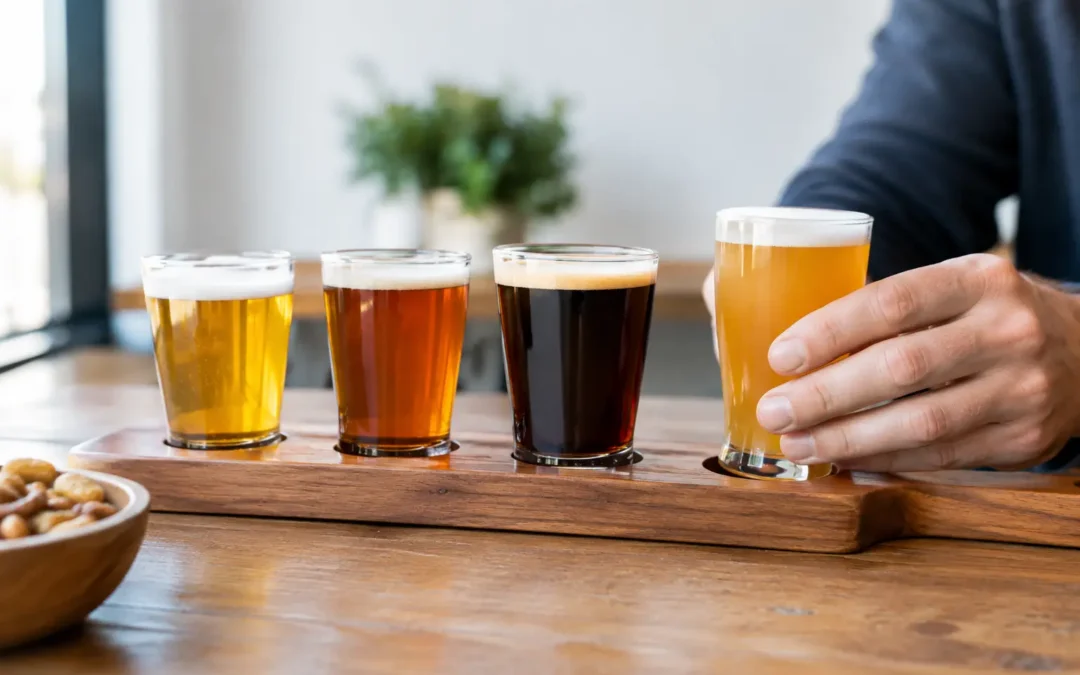
A craft flight should feel like a great first round, not a pop quiz. You are there to find a beer you love, compare a few pours with friends, and maybe discover that the style you swore you disliked is actually pretty great when it is fresh, well made, and served in the right setting. Knowing how to choose craft flights starts with one simple idea: pick beers that give you a useful range without burning out your palate by the second glass.
How to Choose Craft Flights for Your Taste
Start with what you already know you enjoy. If a crisp lager, light ale, or easy-drinking blonde is usually your move, make that your anchor pour. If you reach for hoppy beers, start with a pale ale or IPA you recognize. A flight is a chance to explore, but it does not need to be four total wild cards.
From there, add contrast. The most satisfying flights usually include beers with different levels of malt, hops, color, and strength. A light beer, a hop-forward beer, a darker malt-driven pour, and something seasonal or unexpected gives you enough variety to notice what changes from glass to glass.
The goal is not to order the strongest or strangest beers on the board. It is to build a lineup you will actually enjoy drinking. If you know you do not like heavy roast character, a stout may not be the right pick just because it rounds out the colors in your flight. Ask for a suggestion that adds variety while staying near your preferences.
Choose by Flavor, Not Just Beer Style
Beer styles are helpful shorthand, but flavor is what matters. Two IPAs can taste completely different. One might be bright with citrus and tropical fruit, while another leans piney, bitter, and resinous. Likewise, a lager can be crisp and dry, rounded and bready, or a little sweet depending on how it is brewed.
When looking over a tap list, pay attention to flavor descriptions. A few words can tell you much more than the name alone. Terms like citrus, floral, juicy, pine, biscuit, caramel, chocolate, coffee, tart, and crisp are useful signals for what is ahead.
Here is a quick way to think about common flavor directions:
- Light and crisp: lagers, pilsners, cream ales, and blonde ales often bring a clean finish and easy drinkability.
- Hoppy and bright: pale ales and IPAs can range from fruity and juicy to sharp, bitter, and pine-forward.
- Malty and smooth: amber ales, brown ales, and some red ales offer toast, caramel, bread crust, or nuttiness.
- Dark and rich: porters and stouts can bring chocolate, coffee, roast, and fuller body.
- Tart and lively: sour ales may feature fruit, tang, and a refreshing acidity that changes the pace of a flight.
You do not need to memorize styles to make a good call. Tell your server that you like crisp beers but want to try something darker, or that you enjoy hazy IPAs but do not want anything too bitter. That is plenty to get a strong recommendation.
Build a Flight Around a Simple Theme
A random flight can still be fun, but a loose theme makes tasting more memorable. You may choose a light-to-dark progression, compare two or three hop-forward beers, or try familiar styles alongside one new pour. If the taproom has a seasonal release, that can be your adventure pick.
For a first-time craft flight, try one approachable beer, one beer in your usual lane, one beer that is slightly outside it, and one brewery favorite. That balance keeps the experience low-pressure. You will have a reliable pour if the experimental choice is not for you, and you will still leave with a better sense of what to order next time.
If you are sharing tastes with a table, coordinate before everyone orders. Four friends choosing four different flights can create a great informal tasting, especially when each person picks a different theme. Just remember that more samples are not always better. Your palate gets tired, and a few thoughtful tastes beat a dozen forgettable ones.
Watch ABV and Palate Fatigue
ABV, or alcohol by volume, is one of the most practical details on a tap list. It tells you how strong a beer is, but it also hints at how much intensity the beer may carry. A higher-ABV imperial IPA, barrel-aged stout, or strong ale can be delicious, but it can quickly dominate the rest of a flight.
If you want a full range of flavors, keep most of your selections in a moderate ABV range and use bigger beers as a final taste. A 5% lager followed by a 9% imperial IPA is easier on your palate than the reverse. The same goes for heavily fruited sours, aggressively bitter IPAs, and rich dark beers. These are not bad choices. They simply need the right place in the lineup.
A good rule is to taste from delicate to intense: light and crisp first, then hop-forward or tart beers, then maltier dark pours, with the strongest option last. There are exceptions. A sharply acidic sour can make a lighter lager seem muted afterward, so it may work better toward the end. Trust your own taste, but use the order as a helpful starting point.
Ask for a Tasting Pour Before Committing
If a beer description has you curious but unsure, ask whether a small sample is available. This is especially useful for styles that vary widely, such as sour ales, hazy IPAs, Belgian-inspired beers, and dark lagers. A quick taste can save a spot in your flight for something that fits you better.
Be specific when you ask. Instead of saying, “What is good?” try, “I like tropical hop flavor but not a harsh bitter finish,” or “I usually drink lighter beers, but I want to try something with a little toast or caramel.” Those details give the beer team a real starting point.
It also helps to be honest about what you do not enjoy. If you dislike coconut, coffee, smoke, or tart fruit flavors, say so. Breweries make a wide range of beer because drinkers have a wide range of tastes. There is no prize for forcing down a pour that is not your thing.
Pair Your Flight With Food That Helps It Shine
Food can make a flight even better, especially if you are trying bolder beers. Salt, fat, spice, and sweetness all change the way beer tastes. A crisp lager can cut through a rich smash burger. A bright IPA can stand up to salty fries and a savory sandwich. A stout can be a surprisingly good match for charred meat, caramelized onions, or dessert.
The trade-off is that big flavors can also distract from subtle beers. If your main goal is to learn the differences between each pour, take a few sips before the first bite. Then enjoy the pairing. You will notice more of the beer on its own and more of the way it works with the food.
For a group meal, flights are especially useful because everyone can find a pairing that works. One person may love a tart sour with a spicy dish, while another finds their perfect match in a smooth cream ale and a burger. That is part of the fun of a brewpub table: there is room for different tastes.
Taste With Curiosity, Not Rules
Take a small sip, let it sit for a moment, and notice the finish. Is it dry, sweet, bitter, roasty, fruity, or clean? Then take another sip. The first taste gives you an impression; the second often tells you whether you want more.
Water between pours helps reset your palate, particularly after a strong IPA or stout. So does taking your time. A flight is not a race, and beer changes slightly as it warms. A darker beer may open up with more chocolate or malt character after a few minutes, while a pale lager is often at its crispest when enjoyed fresh and cool.
Most of all, give yourself permission to have a favorite. The “best” beer in the flight is the one you want another sip of. At South Park Brewing, that might mean starting with something familiar, adding a rotating beer that catches your eye, and finishing the visit with a full pour of the one that earned the win.