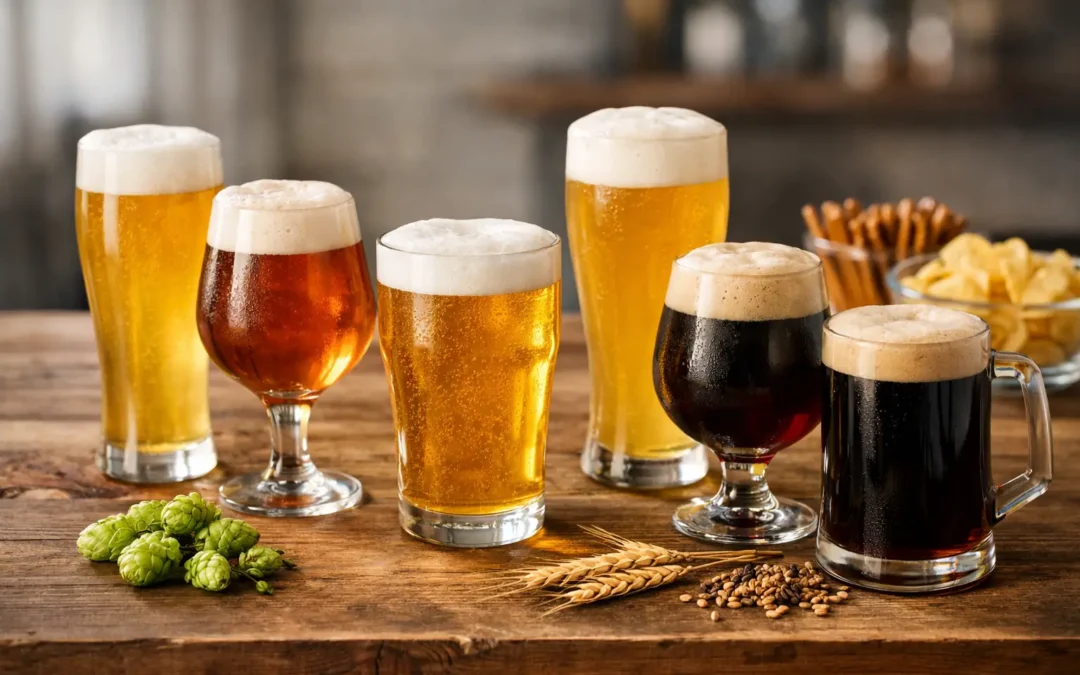
A first craft beer should taste like an invitation, not a challenge. The best beer styles for beginners are usually balanced, refreshing, and easy to understand after one sip. You do not need to love bitter IPAs or chase rare releases to have a great brewery experience. Start with a flavor that sounds good to you, grab something satisfying to eat, and let your palate build from there.
Beer comes in a huge range of colors, strengths, and flavors, but the basics are simple. Malt brings flavors like bread, caramel, toast, chocolate, or coffee. Hops can add citrus, pine, flowers, tropical fruit, or bitterness. Yeast contributes everything from clean and crisp to spicy and fruity. The right beginner beer is the one where those elements feel friendly rather than overwhelming.
Best Beer Styles for Beginners: Start With Balance
1. Blonde Ale
A blonde ale is one of the easiest places to start. It is typically pale gold, lightly malty, and gently hopped, with a clean finish that makes another sip sound like a good idea. Think soft bread or cracker notes, a touch of honey-like sweetness, and just enough hop flavor to keep it from tasting flat.
Blonde ales are a smart choice for people who usually reach for light beer but want to try something made with more craft character. They also work beautifully with salty, crispy food. A blonde alongside fries, wings, or a smash burger is a low-pressure introduction to beer pairing.
2. Cream Ale
Despite the name, cream ale does not usually taste creamy in the dairy sense. It is a light, crisp American style with a smooth body and a mild sweetness. Many have a clean lager-like finish, while still carrying a little more roundness than a standard light lager.
This is a great option when you want beer that is refreshing without being watery. It tends to stay low on bitterness and high on drinkability, making it especially welcome on a sunny patio or during a long catch-up with friends. If you are not sure where to begin, a cream ale is rarely a bad call.
3. Helles Lager or American Lager
Lagers are made for people who value crispness. A Helles lager is pale, clean, lightly malty, and subtly floral or herbal from the hops. American craft lagers may lean similarly easygoing, though each brewery puts its own touch on the style.
The trade-off is that lighter beers leave nowhere to hide. A well-made lager is simple by design, but it takes real brewing skill to make simple taste this good. For a beginner, that means a clean, familiar beer with enough flavor to show why a fresh taproom pour can beat the usual grocery-store option.
Order a lager if you like sparkling water, dry white wine, or anything crisp and uncomplicated. It is also one of the most reliable choices with burgers, pizza, tacos, and fried food because its carbonation cuts through rich flavors instead of competing with them.
4. Wheat Beer
Wheat beers are often soft, hazy, and refreshing, with a pillowy texture that feels less sharp than many hop-forward beers. American wheat beers may bring gentle citrus or bread notes. Belgian-style wits can taste brighter, with orange peel and coriander character. German-style hefeweizens often carry banana and clove flavors from the yeast.
That range matters. If you like citrusy, fresh flavors, try a witbier. If a hint of banana bread sounds appealing, go for a hefeweizen. If you want something more neutral, an American wheat beer may be your lane.
Wheat beer is not always the right fit for someone who dislikes fruity aromas, but it is an excellent gateway for drinkers who find typical beer too dry or bitter. It pairs especially well with lighter fare, spicy dishes, salads, and food with a little citrus kick.
5. Amber Ale
Amber ale is where many new beer drinkers discover that darker color does not automatically mean heavy flavor. These beers are usually copper to deep amber, with toasted bread, caramel, and mild nutty notes. Hop bitterness is present but generally measured.
An amber ale has more malt depth than a blonde or cream ale, yet it remains easy to drink. It is a good next step if you want more flavor without jumping straight to a big stout or a sharp IPA. Cooler weather, grilled meats, and a burger with plenty of char are all strong reasons to order one.
Watch the alcohol level, though. Some amber ales stay sessionable, while others edge into stronger, richer territory. If you are new to craft beer, starting around 5% ABV gives you plenty of room to enjoy the flavor at a comfortable pace.
6. Fruited Sour Ale
Sour beer can sound intimidating, but a fruit-forward sour is often more approachable than its name suggests. These beers may taste like tart lemonade, berries, peaches, mango, or a bright fruit snack with a grown-up edge. The best examples balance tangy acidity with real fruit flavor instead of puckering your whole face.
If you enjoy kombucha, lemonade, sparkling fruit drinks, or tart candy, a fruited sour could be your surprise favorite. Ask whether it is lightly tart or intensely sour before ordering. Some sours are bright and refreshing; others are deliberately funky, dry, or intensely acidic. There is no prize for starting with the wildest one.
A fruited sour can be particularly fun with spicy food, since the fruit gives your palate a cooling contrast. It also works as a change-of-pace beer when you want something playful rather than traditional.
7. Milk Stout or Sweet Stout
For the person who says, “I do not like dark beer,” a smooth stout can be a pleasant correction. Stouts get their color from roasted grains, which can bring cocoa, coffee, toasted bread, and dark chocolate notes. A milk stout or sweet stout has a fuller body and a touch of sweetness that softens the roast.
This is not the same as drinking a meal in a glass. Some stouts are heavy and high in alcohol, but many are balanced enough for a relaxed pint. If you enjoy cold brew, chocolate desserts, or roasted flavors, a stout deserves a chance.
The key is choosing the right version. Skip barrel-aged imperial stouts for your first attempt – they can be boozy, thick, and layered with intense flavors. Start with a lower-ABV stout and pair it with a burger, smoked food, or something sweet at the end of the meal.
How to Order Your First Craft Beer Without Guessing
The menu language can look more complicated than it is. Start by telling your server what you already like. Maybe you prefer light, crisp drinks; maybe you want something fruity; maybe coffee and chocolate are more your speed. Those clues are far more useful than pretending you know every style.
A flight can help when you are curious about several beers, but it is not always the best first move. Tiny pours can blur together, especially if you sample a lager, sour, IPA, and stout back-to-back. Choose two or three styles in a sensible order instead: light and crisp first, then maltier or fruitier, then darker or stronger. Take a sip of water between pours, and give each beer a moment before making up your mind.
Do not choose based on color alone. Pale beer can be intensely bitter, and dark beer can be smooth, light-bodied, and surprisingly easygoing. The two details worth checking are bitterness and ABV. Lower bitterness is usually gentler for new drinkers, while a lower ABV helps you enjoy a full pint without the beer getting ahead of your evening.
At South Park Brewing, the best approach is the same one we use with friends at the bar: say what sounds good, ask a question, and trust your own taste. Beer is personal. A style that becomes your go-to might be a crisp cream ale, a bright sour, or a roasty stout that caught you completely off guard.
Your first favorite does not have to be your forever favorite. Order the beer that fits the moment, pair it with food you are excited to eat, and leave room for one new taste next time. That is how a casual pint turns into a favorite local ritual.