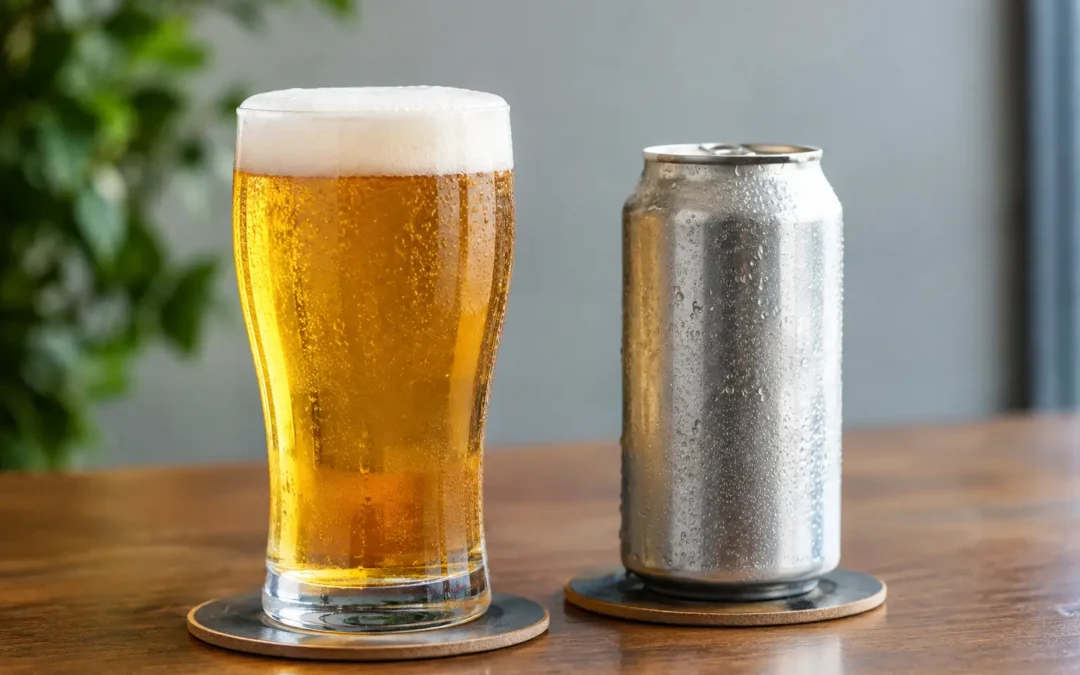
A cold pint at the bar and a cold can from the fridge can hold the exact same beer, yet they rarely feel like the same experience. In the draft versus canned beer debate, neither format automatically wins. The better choice depends on how the beer was stored, served, and enjoyed – plus whether you are settling in for burgers with friends or packing a cooler for a Colorado day outside.
Draft versus canned beer starts with the beer itself
Brewers generally package the same finished recipe for draft and cans. A crisp lager is still a crisp lager; a roasty stout is still a roasty stout. What changes is the route from the brewery to your glass, and that route can change aroma, carbonation, temperature, and the first impression of every sip.
Draft beer travels in a keg and is pushed through a tap system with gas. Canned beer is sealed in an individual container, usually with a small amount of dissolved carbon dioxide to keep its intended sparkle. Both methods can preserve beer beautifully. Both can also let a great beer down when handling falls short.
That is why “draft is always fresher” and “cans are always better” are both too simple. A recently tapped keg on a well-maintained system can be excellent. So can a properly stored can that was packaged recently and kept cold. Freshness is a chain, not a format.
Why draft beer can taste different
A fresh draft pour has a little theater built into it: the glass, the foam, the aroma arriving before the first sip. Those details matter. A clean glass and a proper head of foam help release hop oils and malt aromas, making a beer feel more expressive than it might straight from a container.
Carbonation is often the biggest noticeable difference. A draft system can be adjusted to suit a style, so a cream ale may pour soft and smooth while a lager carries a sharper, livelier snap. Nitrogen service creates an especially creamy texture for certain dark beers, with a dense cascading head and a gentler carbonic bite. That is an experience a standard can does not fully copy.
Temperature matters, too. A thoughtful taproom serves different styles in ranges that let their character show. An imperial IPA served ice-cold may hide some of its fruit and bitterness at first; a stout that warms slightly can reveal cocoa, coffee, and toasted notes. Draft service gives the person behind the bar more control over that moment.
Still, draft has a responsibility attached to it. Beer lines need regular cleaning, kegs need correct refrigeration, and gas pressure needs to match the beer and system. If a line is dirty or a keg has been sitting too long, the pour can taste dull, buttery, sour in the wrong way, or strangely foamy. Those flaws are not proof that draft beer is bad. They are proof that service matters.
What cans do especially well
Modern cans are serious beer packaging. They block light completely, which protects hop-forward beers from becoming skunky. Glass bottles can be vulnerable to light exposure, especially clear and green bottles. A can keeps that concern out of the equation.
Cans are also tightly sealed against oxygen when packaging is done well. Oxygen is the enemy of bright hop aroma and clean, fresh flavor over time. A properly filled can gives beer a compact, protected home until you are ready to open it. For a beer finder pickup, takeout order, camping trip, backyard cookout, or a fridge stocked for later, that convenience is hard to beat.
The can itself does not make beer taste metallic. If you drink from a can and notice a metallic impression, it is more likely tied to temperature, aroma perception, an older beer, or an off flavor than the aluminum. The inside of a beer can has a food-safe liner, so beer does not sit directly against bare metal.
The trade-off is that drinking straight from a can limits aroma. Your nose is doing a large part of the tasting, especially with juicy IPAs, Belgian-style ales, and dark beers with layered malt character. Pouring a can into a clean glass closes much of the sensory gap. You still get the portability and protection of the can, plus the aroma and visual cues that make a beer feel complete.
Freshness is not the same as a date on the calendar
If you are choosing between a draft list and a cooler shelf, ask a better question than, “Which one is fresher?” Ask how that beer has been treated since it left the brewery.
A can with a clear packaged-on date gives you a useful starting point. Hop-driven beers are usually at their most vivid when enjoyed relatively soon after packaging. Their bright citrus, pine, tropical fruit, or dank notes gradually fade. Malt-forward beers, lagers, and stronger dark beers can have a longer runway, although each brewery and recipe has its own recommendation.
For draft, a taproom that turns kegs regularly has a real advantage. Popular beers move quickly, and staff can spot a pouring issue before it becomes your problem. At a busy brewpub, a house beer served from a recently tapped keg can be as direct as beer gets: brewed locally, conditioned, kept cold, and poured with care.
Storage is just as important as age. Heat speeds up flavor changes, particularly in packaged beer. Keep cans cold when possible, avoid leaving them in a hot car, and do not treat a garage shelf as long-term beer storage during a Colorado summer. Beer will not necessarily become unsafe, but it can lose the clean flavor the brewer intended.
Match the format to the occasion
Draft is usually the right call when the setting is part of the point. You want to explore a flight, compare styles, enjoy a proper pour with food, or let a bartender steer you toward something new. It is also ideal for beers whose texture and aroma deserve attention, from a silky stout to a bright, freshly hopped IPA.
Cans win when the beer needs to travel. They are lighter than glass, stack neatly in a cooler, and are welcome in many places where glass is not. They make sense for a hike, tailgate, picnic, ski weekend, or simply a quiet night where leaving the couch is not on the agenda.
There is also a budget and pace consideration. A draft pour invites you to stay awhile, pair it with a meal, and make an evening of it. A four-pack gives you control over timing and serving size at home. Neither is more serious about beer. They answer different needs.
A few style-specific calls
For a clean lager or blonde ale, draft can highlight a crisp finish and tight foam, especially alongside salty fries or a smash burger. A canned version can be just as satisfying after a day outdoors, provided it has stayed cold.
For an IPA, freshness deserves extra attention in either format. On draft, look for a lively aroma and a balanced pour rather than a flat, tired finish. In cans, check the package date and pour it into a glass if you want the full hop character.
For stout, porter, and other malt-forward beers, draft service can add a plush texture that makes roast, chocolate, and coffee notes feel more generous. Cans remain a great choice for taking those richer flavors home, particularly when you can let the beer warm a few degrees in the glass.
For sour ales, cans offer practical protection and portability, while draft lets you judge the beer’s sparkle and bright acidity right away. A good sour should feel intentional: tart, refreshing, and balanced rather than harsh or muddled.
Order with confidence, then pay attention
At South Park Brewing, the best move is often simple: choose the beer that fits the moment, not the format you think you are supposed to prefer. Ask what is pouring especially well, try a style outside your usual order, or grab cans when your plans take you beyond the taproom.
Then give the beer a fair shot. Use a clean glass when you can, keep packaged beer cold, and do not be shy about mentioning a draft pour that seems off. Good beer is meant to be shared, talked about, and enjoyed without a rulebook. Pick the format that gets you closer to that first satisfying sip.