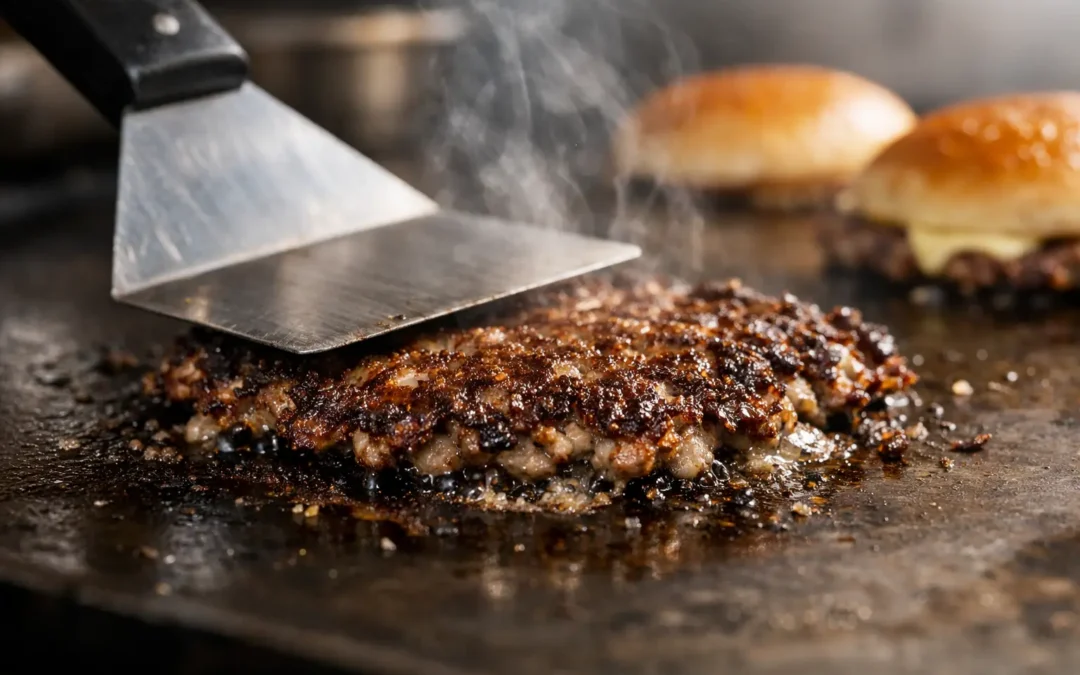
A great smash burger announces itself before the first bite. You hear the edge crack slightly, see the lacy browned perimeter, and catch that savory griddle aroma under the cheese. This guide to smash burger texture is about creating that contrast on purpose: a deeply crisp exterior, a juicy center, and a bun that holds the whole thing together without getting in the way.
The trick is not a secret seasoning blend or a complicated burger press. It is heat, timing, and restraint. Smash burgers cook fast, which means every choice matters a little more. Use the right beef, get the surface properly hot, smash once, and build the burger while the patty is still at its best.
What Makes Smash Burger Texture Different?
A thick pub burger is built around a tender, rosy interior. A smash burger works from the outside in. Pressing a loose ball of beef onto a ripping-hot flat surface creates more direct contact between the meat and metal. That contact drives the Maillard reaction, the browning process responsible for the savory, roasty flavor and the dark crust people come back for.
The goal is not to flatten beef until it becomes dry or hard. The goal is to make a thin patty with maximum surface area, then cook it quickly enough that the crust develops before the interior loses all of its moisture. Done well, the center stays rich and tender beneath those crisp, irregular edges.
That is why a smash burger should feel different from a diner patty or backyard grill burger. It is thinner, craggier, saltier on the surface, and more focused on beefy crust. Two thin patties also stack better than one oversized patty because each layer brings more browned edge and more space for melted cheese.
Start With Beef That Can Handle the Heat
Fat is texture insurance. Ground beef around 80/20 gives a smash burger enough fat to stay juicy and enough rendered beef flavor to help the crust fry at the edges. Leaner blends can work, but they have less room for error. If you use 90/10, the burger may brown quickly yet eat dry and tight.
Keep the beef cold, but do not overwork it. Portion it into loose balls, usually about 2 to 3 ounces each, and avoid packing them like meatballs. Dense balls resist spreading, while loosely gathered beef creates those appealing rough edges when pressed.
There is no need to mix seasonings into the meat. Salt inside the grind can change the texture, pushing it toward a springier, sausage-like bite. Season the exposed surface just before or immediately after smashing instead. Freshly ground black pepper is welcome, but salt is the nonnegotiable part.
Why loose beef creates better edges
The delicate, nearly frizzled edge of a strong smash burger comes from tiny strands of beef meeting the griddle. When the ball is packed tightly, those strands cannot spread as freely. You may still get a browned patty, but it will have a neater outline and less of the crisp, shattered texture that makes this style special.
The Griddle Is the Real Texture Tool
A cast-iron skillet, steel griddle, or flat-top is the right move. Grill grates leave much of the meat suspended over open space, so they cannot produce the same all-over crust. The burger needs uninterrupted contact with a flat, heavy cooking surface.
Preheat longer than you think. The surface should be hot enough that the beef begins sizzling aggressively the moment it lands. If the pan is only warm, moisture leaks out before browning begins. The patty turns gray, steams in its own juices, and develops a softer texture instead of a crisp crust.
You do not need a pool of oil if your beef has adequate fat. A very light wipe of neutral oil can help with the first batch, especially on a less-seasoned skillet, but too much oil creates shallow-fried softness rather than direct browning. Keep the surface clean between batches as well. Burned residue tastes bitter and prevents even contact.
For home cooks, medium-high to high heat is usually the practical range, but your equipment decides the exact setting. A thin pan may scorch before it holds enough heat. A heavy cast-iron skillet can take more time to preheat but rewards you with steadier browning when cold beef hits the surface.
How to Smash Without Squeezing Out the Good Stuff
Put the beef ball on the hot griddle, cover it with a small square of parchment paper, and press firmly with a stiff metal spatula or burger press. Apply strong, even pressure for about 8 to 10 seconds. That initial press is the smash.
Then stop.
Repeated pressing after the patty has begun cooking is not helping it brown. At that point, it mainly pushes rendered fat and juices away from the meat. The result can be thinner, but not better: dry spots, weak crust, and a greasy griddle instead of a juicy burger.
A sturdy spatula matters because you need to scrape under the patty when flipping. Get beneath the browned layer in one confident motion. If you leave the crust behind on the griddle, you leave behind the best part of the burger. A thin, sharp-edged turner is more useful here than a flexible fish spatula.
Timing is shorter than most people expect
The first side often needs only 60 to 90 seconds, depending on heat and patty thickness. Look for deep brown color around the edges and a surface that releases with a decisive scrape. Flip once, add cheese right away if you are using it, and cook the second side briefly, often 30 to 60 seconds.
That short finish is a key part of the guide to smash burger texture. The second side does not need to match the first side’s crust exactly. Its job is to finish the meat, melt the cheese, and preserve the first side’s hard-won crispness.
Cheese, Buns, and Toppings Can Protect or Ruin the Bite
American cheese is popular for a reason. It melts quickly and evenly, filling the crags of the patty without forming a thick, rubbery layer. Cheddar, pepper jack, or other cheeses can be excellent, but they may need a lid or a brief steam to melt before the burger overcooks. Choose based on the finish you want, not just the cheese you like on its own.
Toast the cut sides of a soft bun on the griddle. The light crust gives the bun enough structure to resist burger juices and sauces. A bun that is too thick can overwhelm a thin patty, while an untoasted bun absorbs moisture and collapses. Potato rolls and soft sesame buns are reliable because they compress easily without turning pasty.
Keep toppings purposeful. Pickles bring acid and snap, onions add crunch or sweetness, and a burger sauce adds richness. But a towering pile of wet lettuce, tomato, or oversized toppings can soften the crust before the first bite. If fresh tomato is part of your ideal burger, use thin slices and serve right away.
At a brewpub, that balance matters even more. A crisp burger should still hold its own next to a cold lager, a bright pale ale, or a hop-forward IPA. The food does not need to compete with the beer, but it should have enough browned flavor, salt, and acidity to keep every bite lively.
Common Texture Problems and the Fix
If your patties are pale, the griddle is not hot enough or is too crowded. Cook fewer burgers at once so the surface temperature can recover. If the burgers are dry, check the beef blend first, then make sure you are not pressing after the initial smash.
If the patty sticks and tears, wait a few more seconds before scraping and use a sharper spatula. Sticking is not always a failure – a little adhesion helps create crust – but the goal is to release that crust intact. If the edges are crisp but the middle feels tough, you may be using too much pressure for too long or cooking the second side too aggressively.
There is also a trade-off worth accepting: smash burgers are best fresh. Their defining texture is at its peak right off the griddle, when the edges are crisp and the cheese is molten. Takeout can still be satisfying, but steam in a closed container softens the crust. For the best at-home result, build quickly, serve immediately, and save the second round for later rather than holding the first.
The next time you make burgers, pay attention to the sound when beef meets the griddle and the scrape when the crust releases. Those small moments tell you more than a timer ever will. Give the patty heat, one committed smash, and a fast trip to a toasted bun, and the texture will do the talking.