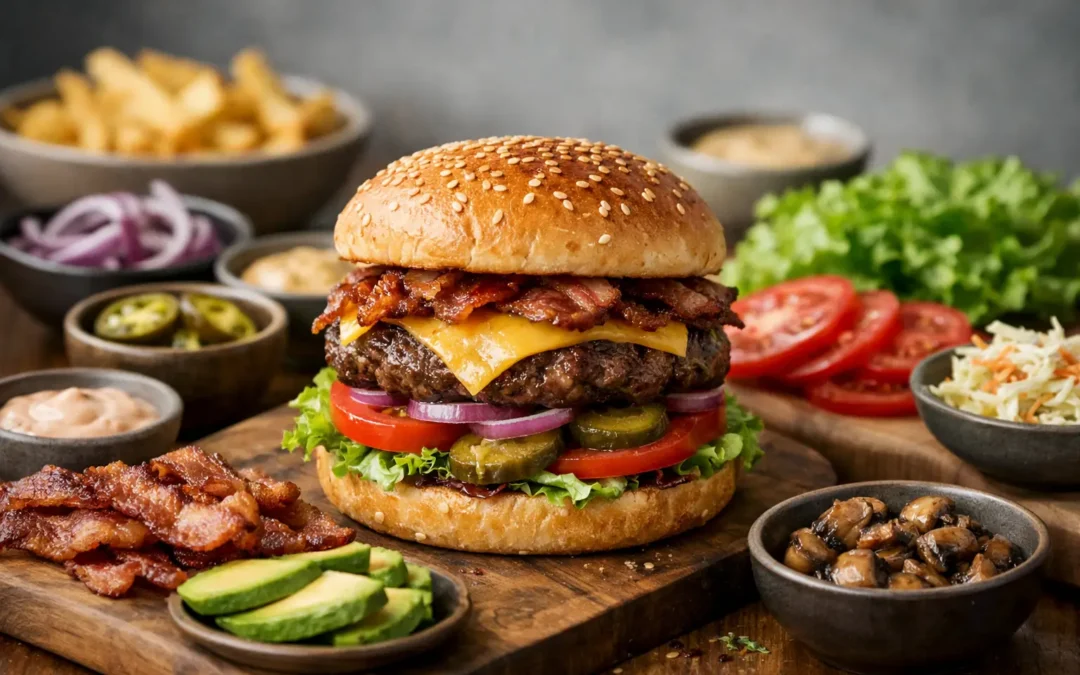
A great burger can go sideways fast. Stack on too many rich toppings and the patty disappears. Add a wet sauce without something crisp, and the bun gives up before the last bite. Learning how to choose burger toppings is less about piling on favorites and more about building contrast that still lets a good burger taste like a burger.
For a smash burger, that balance matters even more. The thin, crisp-edged patty brings concentrated beef flavor, savory browning, and plenty of richness. Your toppings should bring freshness, crunch, acid, heat, or another layer of savory flavor without turning the whole thing into a slippery, oversized project.
Start With the Burger, Not the Toppings
Before choosing cheese, sauces, and extras, consider the burger’s style. A thick, juicy pub burger can stand up to bigger flavors and heavier toppings. A smash burger has a different job: its crisp edges and fast-cooked flavor are the main event, so it usually benefits from a tighter, more deliberate topping plan.
Think about the patty’s seasoning, too. A simply seasoned beef patty gives you room for bold toppings like pepper jack, pickled jalapeños, or barbecue sauce. If the burger already has a deep, smoky, highly seasoned profile, a bright topping like shredded lettuce, dill pickles, or tangy sauce may do more for the bite.
The bun plays a role as well. Soft buns are a natural match for smash burgers, but they need protection from moisture. Cheese can create a flavorful barrier over the patty, while lettuce, onions, or pickles can add texture without soaking straight into the bread.
Use the Five-Part Topping Test
The easiest way to choose burger toppings is to check for five elements: richness, salt, acid, crunch, and freshness. You do not need all five in every bite, but looking for what is missing keeps a burger from tasting flat or feeling heavy.
Richness comes from the beef, cheese, bacon, creamy sauces, and fried toppings. It makes a burger satisfying, but too much richness can dull every other flavor. If you are adding bacon and a creamy sauce, choose one cheese that melts well instead of adding multiple heavy components.
Salt is often built into cheese, cured meat, pickles, and sauces. A little salt makes beef taste more beefy. Too much makes the burger one-note, especially when bacon, salty cheese, and a salty sauce all show up at once.
Acid is the secret weapon. Pickles, pickled onions, pepperoncini, fresh tomato, mustard, vinegar-based slaw, and a squeeze of citrus in a sauce can cut through beef and cheese. If a burger sounds delicious on paper but also sounds very rich, it probably needs an acidic element.
Crunch keeps the texture lively. Shredded lettuce, onions, pickles, crispy bacon, fried onions, and slaw all bring contrast. With a smash burger, pickles and onions are especially useful because they add snap without making the burger difficult to hold.
Freshness can be as simple as cool lettuce, tomato, herbs, or a crisp pickle. It gives the palate a reset between savory bites. This is why a classic burger with American cheese, pickles, onion, lettuce, and sauce continues to work so well: every ingredient has a purpose.
Choose One Main Flavor Direction
The best burgers usually have a point of view. Rather than mixing every topping you like, choose a main flavor direction and build around it. A few well-matched ingredients land harder than a crowded list of extras.
For a classic, diner-style smash burger, go with melted American cheese, dill pickles, diced or shaved onion, lettuce, and a tangy house-style sauce. The cheese brings creamy saltiness, while the pickles keep the beef from getting too rich.
For a smoky burger, bacon, smoked cheddar, grilled onions, and a restrained amount of barbecue sauce make sense. Keep something sharp in the mix, such as pickles or pickled onions. Without that counterpoint, smoke plus sweet sauce plus bacon can become heavy after a few bites.
For a spicy burger, pair heat with cooling or tangy ingredients. Pepper jack and jalapeños work well with shredded lettuce, ranch-style sauce, avocado, or pickled onion. Fresh jalapeños deliver a greener, brighter heat; pickled jalapeños add tang along with the burn. Choose based on what the burger needs.
For a mushroom-and-Swiss approach, lean into savory flavor but avoid letting it go soft all the way through. Sautéed mushrooms, Swiss cheese, and caramelized onions are delicious, yet they all have a tender texture. Add a little peppery arugula, crispy onions, or a mustard-forward sauce for lift.
Be Careful With Moisture
A juicy burger is the goal. A soggy burger is not. Tomatoes, sautéed mushrooms, sauces, slaw, and melted cheese can all add moisture, so topping order matters as much as topping choice.
Keep sauces controlled. A thin layer on the bun adds flavor without sending sauce down your hands. Place lettuce beneath wetter toppings when possible, and drain cooked mushrooms or onions before they hit the patty. If you are ordering takeout, consider asking for a very wet topping or sauce on the side. It is a small move that can make a big difference by the time the burger reaches your table.
Tomato is a good example of a trade-off. It offers freshness and mild acidity, but it can also slide and water down the bun. On a thick burger, tomato often works beautifully. On a compact smash burger, pickles can provide a more reliable tang and crunch.
Match Cheese to the Job It Needs to Do
Cheese is not just a flavor choice. It also affects melt, texture, salt level, and how the burger holds together.
American cheese is hard to beat for a classic smash burger because it melts quickly and evenly, coating the patty rather than sitting on top of it. Cheddar brings a sharper flavor but can feel heavier, particularly with bacon or barbecue sauce. Swiss is mellow and nutty, making it a strong match for mushrooms and onions. Pepper jack brings heat and works best when the other toppings are not already aggressively spicy.
If you want blue cheese, treat it as the loudest ingredient on the burger. Pair it with restrained toppings such as caramelized onions, bacon, or a light amount of arugula. Blue cheese, hot sauce, bacon, and barbecue sauce can all be great separately, but together they compete for the same spotlight.
Build for the First Bite and the Last
A burger should not peak in the first bite and then fall apart. When deciding how to choose burger toppings, ask a practical question: can every bite contain some beef, cheese, sauce, and texture?
Spread smaller toppings evenly rather than dropping them in one tall pile at the center. Diced onion generally distributes better than a thick raw onion ring. Shredded lettuce is easier to manage than whole leaves. Pickle chips cover more surface area than one oversized spear.
Height matters, too. A burger that requires you to unhinge your jaw is fun for a photo and less fun at the table. Two or three toppings plus cheese and sauce are often enough. Add more only when each ingredient delivers something truly different.
Let Your Beer Choice Guide the Build
At a brewpub, your pint can help steer your topping choice. Crisp lagers and blonde ales work especially well with salty, classic burgers, pickles, and lighter sauces. Their clean finish clears the richness from your palate and invites the next bite.
An IPA can stand up to spice, sharp cheddar, grilled onions, and bolder sauces, though very bitter beer may make a sweet barbecue sauce taste sweeter. Stouts and darker beers are natural with smoky bacon, mushrooms, caramelized onions, and deeply savory flavors. If your burger is loaded with spice, a smoother cream ale or lighter lager can offer a welcome reset.
There is no single correct pairing. The goal is contrast when the burger is rich and harmony when you want to lean into a shared flavor, such as a malty beer beside caramelized onions and bacon.
Keep It Personal, But Keep It Balanced
Your favorite topping still belongs on your burger. Love raw onion? Go for it. Want double pickles? That is a solid call. The useful part is noticing what needs to change around it. Extra bacon may call for fewer sauces. A creamy, cheesy burger may need pickled peppers. A sweet sauce may need a sharper cheese or mustard.
The next time you are building a burger, start with one flavor direction, add a cheese that fits, then bring in one bright or crunchy counterpoint. That is how a simple stack becomes the burger you want to order again. And when you are ready to put the theory to work, a smash burger and a fresh local pint at South Park Brewing make a pretty convincing field test.