A great beer is rarely found by accident. You might spot a tap handle at a neighborhood pub, notice a four-pack at the store, or hear a friend mention a new release. But knowing how to locate craft beer that fits your taste, is fresh, and is worth ordering again takes a little more than picking the most colorful can.
The good news: you do not need to be a certified beer judge to find something you like. A few smart checks can point you toward better pours, better local spots, and fewer disappointing impulse buys.
Start With the Beer You Actually Enjoy
Craft beer is a big tent. Someone who loves a crisp lager may not want a double dry-hopped IPA, and a committed stout drinker may not be looking for a tart sour ale. The fastest way to find good craft beer is to start with flavors you already know you enjoy.
If you usually reach for something clean and easy-drinking, look for blonde ales, cream ales, pilsners, and lagers. These beers can be simple in the best way: balanced, refreshing, and built for a long conversation over burgers or a sunny afternoon on the patio.
If you want more hop character, start by asking whether you prefer citrusy and bright, piney and resinous, or soft and juicy. IPA is a broad category, not one single flavor. A West Coast-style IPA often brings firmer bitterness and a drier finish, while a hazy IPA can lean fruit-forward with a softer mouthfeel. Imperial IPAs typically bring more intensity and higher alcohol, so they are better treated as a slow-sipping choice than an automatic first round.
For richer beer, look toward porters and stouts. Notes such as coffee, chocolate, roast, caramel, and toasted malt are common, but one stout can be dry and roasty while another feels fuller and sweeter. Sour ales are their own lane, with tangy fruit, bright acidity, or funkier fermentation character depending on the beer.
You do not have to memorize all of this. Just give your bartender or server a useful starting point: “I like a light, crisp beer,” “I want something hoppy but not too bitter,” or “I’m after a dark beer that is not too sweet.” That is enough to get a thoughtful recommendation.
How to Locate Craft Beer Near You
Your best options usually fall into three places: breweries and taprooms, restaurants with intentional beer programs, and stores that take beer seriously. Each has a different advantage.
A brewery taproom gives you the clearest view of what a brewer is making right now. Rotating taps let you try seasonal releases, small-batch experiments, and core beers in their freshest setting. It is also where you can ask direct questions about flavor, ingredients, and the newest release without feeling like you need to know all the terminology first.
A good brewpub adds another benefit: beer and food are part of the same experience. A dry lager can clean up the richness of a smash burger. A bright pale ale can work beautifully with salty fries. A darker stout may be the right call when you want something with more depth after a hearty meal. The best pairing is still the one you enjoy, but food can make a beer you already like taste even better.
Restaurants and bars can be strong choices when their tap list is current and varied. Look for a mix of local breweries, styles beyond IPA, and staff who know what is pouring. A long list is not automatically a good list. Ten carefully kept taps with fresh, well-chosen beer can beat a wall of handles that has not changed in months.
For beer to take home, check well-managed bottle shops, specialty markets, and grocery stores with a dedicated craft selection. Refrigerated inventory is often a positive sign, especially for hop-forward beer. Stores that organize beer by brewery or style and clearly mark new arrivals tend to make the search much easier.
In Colorado Springs, a brewery’s beer finder or current availability information can help when you are looking for a particular local pour outside the taproom. It saves the frustration of driving across town for a beer that was available last week but is already gone.
Read a Tap List Like a Regular
A tap list is not a test. It is simply a menu of clues. The beer name may be fun, but style, ABV, and a short flavor description tell you much more about what is in the glass.
Start with style. It gives you the broadest sense of what to expect. Then check ABV, or alcohol by volume. A 4.5% lager and a 9% imperial IPA may both be excellent, but they suit very different plans for the evening. If you are meeting friends, eating dinner, or planning to have more than one beer, a lower-ABV option may be the smarter place to start.
Descriptions matter, too. Words such as “crisp,” “dry,” “biscuity,” “citrusy,” “roasty,” “tart,” and “juicy” are practical signals. “Crisp” often points toward a clean finish. “Juicy” usually suggests fruit-like hop aroma more than actual fruit sweetness. “Tart” tells you the beer will have noticeable acidity. “Barrel-aged” can mean deeper flavors and, often, a bigger alcohol level.
When the description is vague, ask for a quick comparison. A useful question is, “What is this most similar to on the menu?” Another is, “Is the bitterness noticeable?” Those questions produce better answers than asking whether a beer is simply “good.”
Freshness Matters, Especially for Hoppy Beer
Not every beer has the same ideal drinking window. Many beers can hold up well for a while, but bright hop aroma is usually at its best when the beer is relatively fresh. That fresh citrus, tropical fruit, floral, or piney character can fade over time, leaving a beer that tastes flatter than intended.
When buying packaged beer, look for a packaged-on date when available. For pale ales, IPAs, and other hop-forward styles, newer is generally better. That does not mean a beer becomes undrinkable on a certain date, but it does mean the experience can change.
Malt-forward styles, stronger beers, and some dark beers can be more forgiving. A high-ABV stout may develop interesting flavors with time, while an everyday IPA is typically at its best sooner. Storage also matters. Heat and direct light are rough on beer, which is another reason to buy from places that handle inventory carefully.
At a taproom, freshness is easier to trust when the brewery has steady traffic, regularly rotates its lineup, and can tell you what is new. A busy local spot usually gives beer less time to linger in the system.
Try Before You Commit
The smartest craft beer move is also the simplest: sample when sampling is available. A small taste can tell you more than a menu description ever will. It lets you check whether a beer’s bitterness, sweetness, acidity, or roast character works for you before you order a full pour.
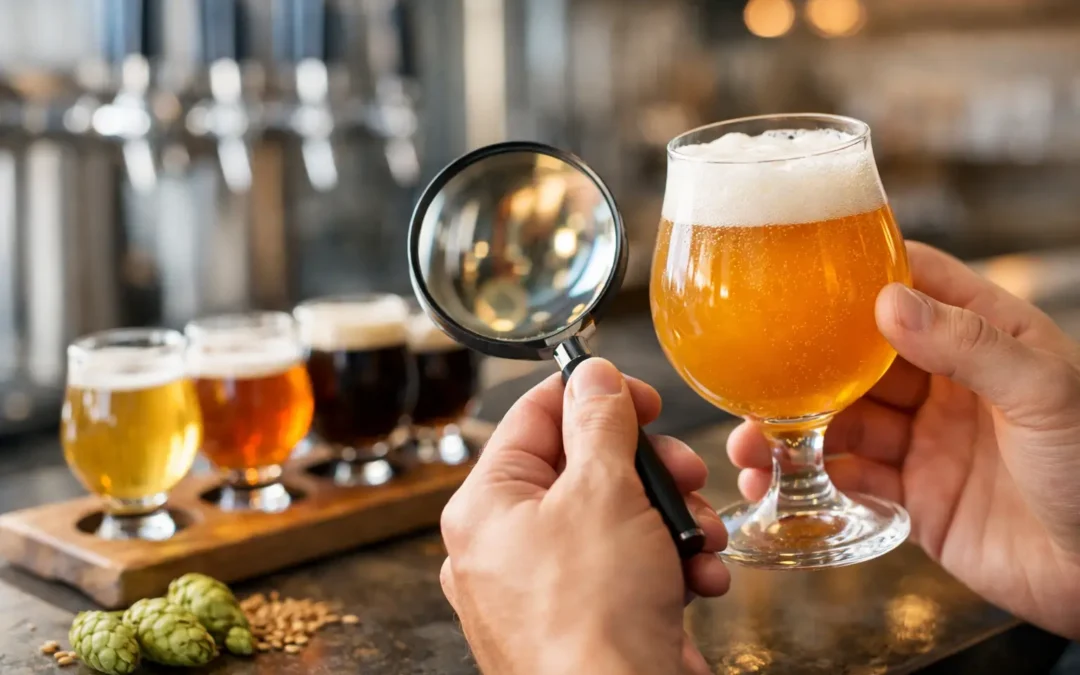
Flights can be useful when you choose them with purpose. Avoid loading up four beers that are all big, high-ABV, or palate-heavy. Instead, compare different styles or move from lighter flavors to richer ones. A lager, blonde ale, IPA, and stout gives you a broad look at a brewery’s range without turning the tasting into guesswork.
If you find a beer you love, make a note of the style and the qualities that stood out. “Dry lager with a crisp finish” is more useful than only remembering the brewery name. Over time, those small notes make ordering much easier, whether you are at your local taproom or traveling somewhere new.
Let Local Breweries Lead the Search
Local breweries are where craft beer becomes more than a can on a shelf. You get the people behind the beer, a direct look at seasonal releases, and a setting built for sharing a table. They also offer a better chance to find beers that may not have wide distribution.
At South Park Brewing, that can mean choosing between approachable blonde and cream ales, bolder imperial IPAs, tangy sour ales, rich stouts, and easygoing lagers, then pairing your pick with a signature smash burger. It is a relaxed way to explore styles without needing to make beer your entire personality.
Bring friends with different tastes, order thoughtfully, and stay curious. The next great craft beer may be a familiar style made exceptionally well, not the loudest beer on the menu.