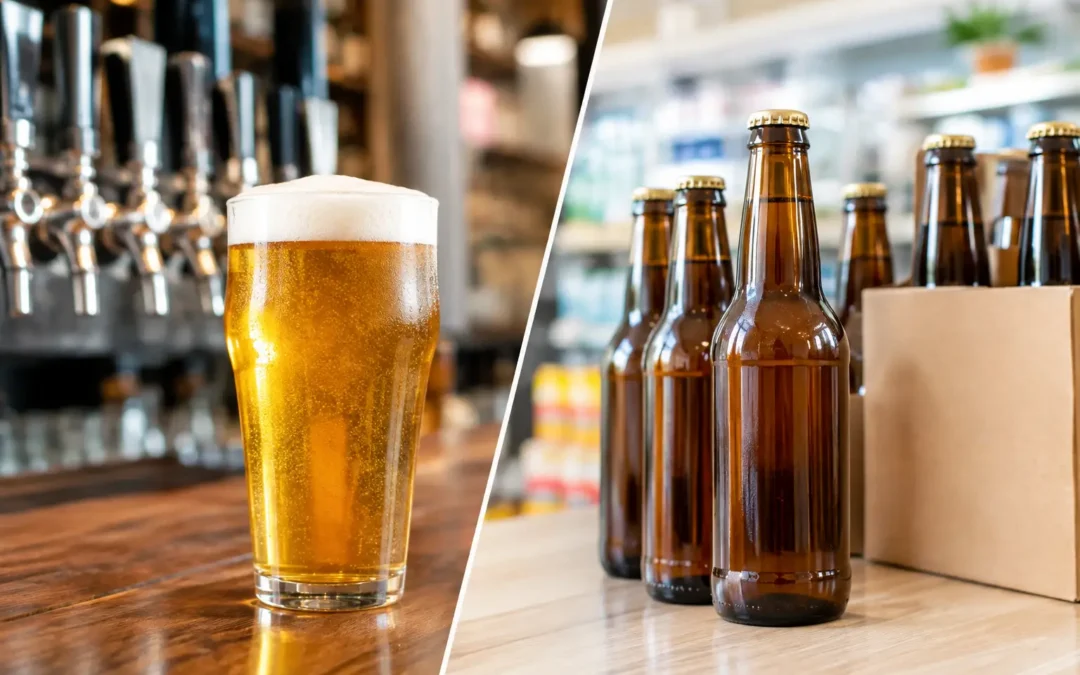
A cold pint beside a smash burger and a few friends feels different from picking up a four-pack on the way home. That is the real point of on-premise versus retail beer: it is not just about where you buy it. It changes how beer is poured, priced, stored, shared, and remembered.
For Colorado Springs beer drinkers, both options earn a place in the fridge and on the weekend calendar. One is built around the moment. The other is built around convenience. Knowing the difference can help you choose the right beer experience, whether you are meeting the crew after work or stocking up for a backyard cookout.
What Does On-Premise Beer Mean?
On-premise beer is purchased and consumed at the same location. Think taprooms, brewpubs, bars, restaurants, music venues, and ballparks. You order a pour, settle in, and enjoy it there.
At a brewery or brewpub, on-premise service gives the beer room to do its job. A lager can arrive in the proper glass at the right temperature. A stout can be paired with something rich and savory. A bright sour can be the first round before a long patio afternoon. The beer is part of the hospitality, not a product you grab and forget.
This is also where rotating taps shine. Brewers can release a small batch, test a new hop combination, or bring back a fan favorite without needing to produce enough packaged beer for a broad retail rollout. If you love trying something you cannot find everywhere, the taproom is usually where the interesting stuff lands first.
The experience is part of the value
A draft pour often costs more per ounce than beer bought from a store, but the price includes more than liquid in a glass. There is staff service, glassware, cold storage, a clean draft system, seating, atmosphere, and the ability to turn a regular Tuesday into a reason to get out of the house.
Food makes that difference even clearer. A crisp blonde ale with a burger, an IPA against salty fries, or a dark beer after a hearty meal is a complete experience. At South Park Brewing, the beer and kitchen are meant to work in the same room, with plenty of space for a quick dinner, a casual celebration, or a long catch-up with friends.
On-premise beer also gives you a low-commitment way to explore. Not sure whether an imperial IPA is your move tonight? Try a smaller pour. Curious about a new lager? Ask what makes it different. A good bartender or server can help you find a style that fits your taste without making beer feel like homework.
What Is Retail Beer?
Retail beer, sometimes called off-premise beer, is purchased to consume somewhere else. Grocery stores, liquor stores, convenience stores, and package shops all fall into this category. Cans, bottles, crowlers, and multipacks are the usual formats.
Retail is about taking the beer with you. It is the practical choice for camping, watching the game at home, bringing something to a friend’s place, or keeping a few dependable favorites ready in the refrigerator. You can often buy more volume for less money per ounce, and you control the timing of when it gets opened.
That freedom comes with a few variables. Beer may have traveled farther, sat warmer than intended, or spent more time on a shelf than it would at the brewery. Most packaged beer holds up well when stored properly, but freshness matters, especially for hop-forward styles. Checking the package date and buying from retailers with good turnover can make a noticeable difference.
Retail gives you flexibility, not the full taproom moment
A can of craft beer can still be excellent at home. In fact, some occasions are better with retail beer. A stocked cooler is hard to beat for a hike, a barbecue, or an evening when pajamas are the dress code.
But a package cannot pour itself into the right glass, suggest a food pairing, introduce you to a new release, or put live conversation at the next table. Retail beer delivers the product. On-premise beer delivers the product plus the setting.
On-Premise Versus Retail Beer: The Biggest Differences
The simplest distinction is location, but several practical differences matter when deciding where to buy.
Freshness and format are usually the first considerations. Draft beer can be exceptionally fresh when a brewery manages its lines and turnover well. Packaged beer protects the product and makes it portable, though its condition depends on age, storage, and handling. Neither format automatically wins every time. A fresh can from a well-kept retailer can be fantastic, while a neglected draft line can disappoint.
Selection works differently, too. Taprooms often have the widest view of one brewery’s current lineup, including limited batches and experimental releases. Retail shelves offer comparison shopping across many breweries, styles, sizes, and price points. Visit a taproom when you want to get to know a brewery. Visit retail when you want to build a mixed lineup for the week.
Price depends on what you are buying. Retail generally offers better value per ounce, especially in multipacks. On-premise pours reflect the cost of operating a hospitality business and providing service. That does not make one overpriced or the other a bargain by default. They are different purchases for different needs.
Portion control can matter more than people expect. At a taproom, a flight or smaller pour lets you sample several styles without taking home a full four-pack of something that is not for you. Retail makes more sense when you already know what you like and want enough to share.
Community may be the biggest gap. Buying local beer at retail supports local makers, and that counts. Drinking on-premise supports the people and places that create gathering spots: brewers, cooks, bartenders, servers, dishwashers, musicians, and event teams. Your pint helps keep a neighborhood room lively.
How to Choose for the Occasion
The best answer is usually not either-or. It depends on the plan.
Choose on-premise when you want a fresh pour, a meal, a new release, a recommendation, or a reason to meet up. It is especially good for visitors who want a taste of the local beer scene rather than just a can with a Colorado label.
Choose retail when the destination is your couch, campsite, tailgate, or friend’s backyard. It is also the smart move when you have found a beer you love and want to keep it around for later.
If you are buying retail beer for a special occasion, buy it close to when you plan to drink it, keep it cold when possible, and avoid leaving it in a hot car. Hop aroma fades fastest under heat and time, while darker and malt-forward styles can be more forgiving. Once you get home, treat good beer like the fresh product it is.
Why Both Matter to Local Breweries
For a local brewery, on-premise and retail sales support different parts of the business. The taproom is where a brand builds direct relationships, gets immediate feedback, and creates reasons for people to return. Retail expands the brewery’s reach beyond its own four walls, helping fans find familiar beer when they cannot make it in for a pint.
That balance can also lead to better beer. Taproom feedback helps brewers learn what regulars are excited about. Retail demand can show which beers have the consistency and staying power to become dependable favorites. A brewery needs both the room where people discover its personality and the package that carries that personality home.
So the next time you are choosing between a barstool and a four-pack, do not frame it as a contest. Grab retail beer when convenience is the win. Head out for an on-premise pour when you want the glass, the food, the people, and the small good feeling of being part of your local beer community.