You have picked the beer, finished the last fries, and decided the night should not end when you leave the taproom. The crowler versus growler question comes down to more than size: it affects freshness, convenience, cleanup, and whether that IPA still tastes as bright at your friend’s place as it did at the bar.
Both are great ways to bring draft beer home. The better choice depends on your plans, the beer in the container, and how soon you expect to crack it open. Here is how to choose without overthinking your next take-home pour.
Crowler versus growler: the quick difference
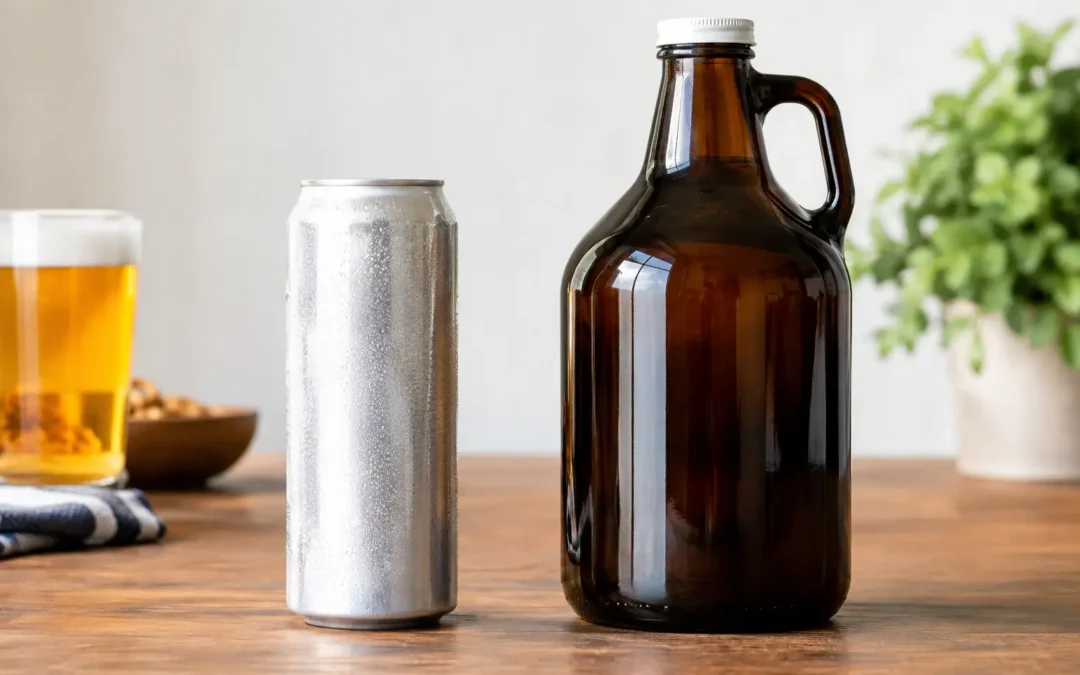
A crowler is typically a 32-ounce aluminum can filled from the tap and sealed on the spot. Think of it as a large, single-use can of fresh draft beer. Once it is sealed, it is closed just like the beer cans in a cooler.
A growler is a reusable bottle, most often 64 ounces, though smaller versions are common. It is filled at the brewery and capped for you to take home. The classic amber glass jug is familiar, but stainless steel and insulated growlers are also out there.
That means a standard growler holds about four pints, while a standard crowler holds about two. If you are bringing beer to a game night or sharing dinner with a few friends, the growler’s larger format can make sense. If you want a couple of pints of a rotating release without committing to a full half-gallon, a crowler is an easy call.
When a crowler is the better move
Crowlers win on convenience. They are lighter than glass, do not require a return visit for a refill, and are easy to pack in a cooler for a picnic, cabin weekend, or backyard cookout. When the beer is gone, recycle the can.
Because a crowler is sealed by a canning machine, it generally has less oxygen exposure than a growler capped by hand. Oxygen is the enemy of fresh beer, especially hop-forward styles. It can flatten bright citrus and pine notes, dull malt character, and make a once-lively beer taste tired.
That makes crowlers an especially smart option for an IPA, pale ale, lager, or other style you want to enjoy as close to tap-fresh as possible. Keep it cold, keep it out of direct sunlight, and you have more flexibility than you would with a growler. It is still fresh draft beer, not a can designed for months of storage, so do not save it for a special occasion that never arrives.
A crowler also works well when you want variety. Maybe you are taking home one crisp lager for pizza night and one stout for later in the week. Two crowlers give you choices without opening more beer than you and your crew plan to finish.
When a growler earns its place
Growlers are built for sharing. A 64-ounce fill is a natural fit for a small gathering, a relaxed patio afternoon, or a meal where everyone wants a proper pour. If you know the container will be opened and enjoyed that day, the larger size is part of the fun.
The reusable factor matters, too. A clean growler can come back for another fill, making it a familiar taproom ritual for regulars who have a favorite beer and a reliable plan for drinking it. Stainless steel growlers add durability and insulation, which can be helpful when you have a longer ride home or are headed somewhere without immediate refrigeration.
There is a little more responsibility with a growler. Bring it in clean and empty, and do not let old beer, dried foam, or lingering odors hang around between fills. Breweries have their own policies on outside containers, and state and local rules can affect what can be filled and how it must be labeled. When in doubt, ask the taproom team before arriving with your favorite vessel.
Freshness matters more after opening
The biggest difference is not just how each container is filled. It is what happens once you open it.
A crowler behaves like a large can. Open it when you are ready to serve, then plan to finish it in one sitting. You can cover it and refrigerate it for a short time, but the carbonation and aroma will fade quickly after opening.
A growler has a wider opening and is usually poured from over several glasses. Each pour lets in some air and releases carbonation. For the best experience, open it when the group is ready, pour generously, and finish it that day. A growler is not a keg in miniature, even if it feels like one when it lands on the table.
For either format, cold storage is nonnegotiable. Heat speeds up flavor loss, and sunlight can damage beer, particularly in clear or green glass. Refrigerate your fill as soon as possible, transport it upright when you can, and skip the habit of leaving it in the car while you run errands.
Match the container to the beer and the occasion
There is no universal winner because different beers and different plans call for different packaging. A few situations make the choice easier:
- Choose a crowler for a fresh IPA you will drink over the next few days, a one- or two-person dinner, or a trip where packing light matters.
- Choose a growler for a same-day gathering, a household that already knows its favorite pour, or a meal where four pints will disappear quickly.
- Choose either for darker, malt-forward beers such as stouts and brown ales, as long as the beer stays cold and you plan to enjoy it soon.
- Ask for the taproom’s recommendation when choosing a limited release. The brewer or bartender may know that one beer is at its best immediately, while another travels particularly well.
Style plays a role, but timing plays a bigger one. A growler of delicate pilsner shared tonight will often taste better than a crowler of that same beer forgotten in the fridge for weeks. Fresh beer rewards a simple plan: buy it cold, get it home cold, and drink it while it is still showing off.
Cost, cleanup, and practical trade-offs
Crowlers usually carry the cost of the can and the one-time sealing process. In exchange, you get portability and no washing. They are also a good option for gifting beer to a friend, since there is no container to track down later.
Growlers may offer better value per ounce, particularly if you already own one and are buying a larger fill. The trade-off is maintenance. Rinse your growler right after it is empty with warm water, let it dry completely, and avoid scented soap or a dishwasher unless the manufacturer says it is safe. A clean container protects the flavor of the next beer you bring home.
It is worth thinking about the pour itself, too. Glass growlers look great on a dinner table, while insulated steel versions are practical but harder to see into. Crowlers fit easily in most refrigerator shelves and coolers, but once opened, they are less convenient to reseal. Neither choice is wrong. The best one is the container that fits your actual plan rather than the one that sounds most official.
A better take-home beer habit
Whether you leave with a crowler or growler from South Park Brewing, tell the team when you expect to open it and who is drinking it. That quick conversation can turn a good choice into the right one, especially when the taps include both easy-drinking favorites and seasonal beers worth bringing home.
Pick the size you can finish fresh, keep it cold from taproom to table, and give that beer a proper glass when the moment arrives. Your take-home pour deserves the same attention as the first one at the bar.