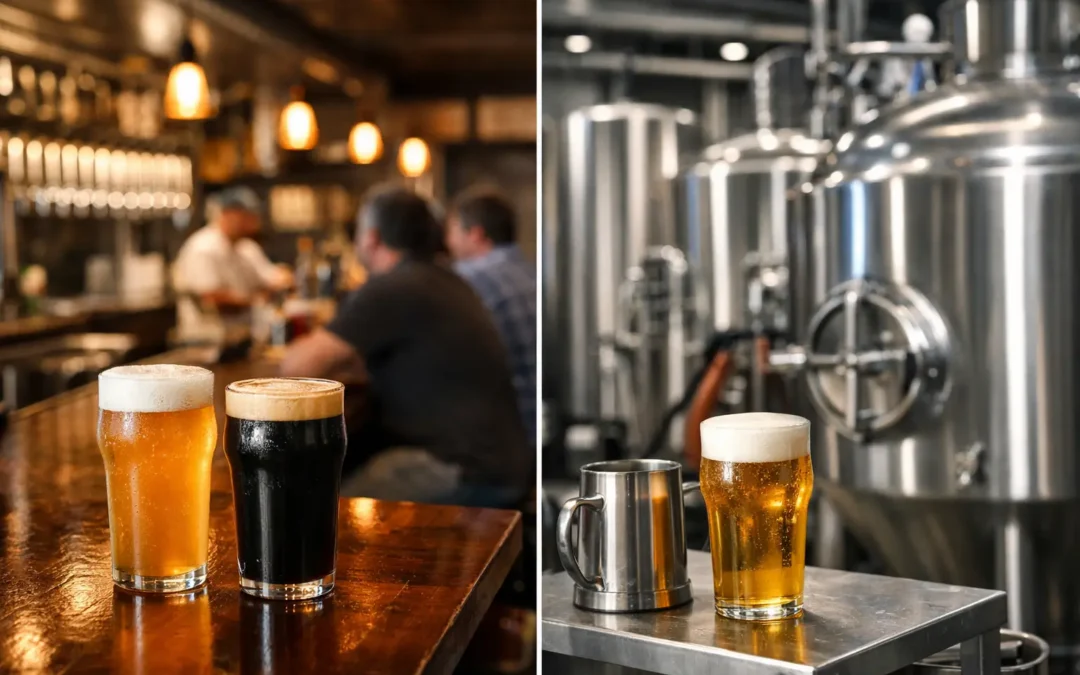
A cold pint is only part of the answer to what makes a brewpub different. The real difference shows up when your table has a stack of smash burgers, your friends are choosing a second round, and the beer in your glass was brewed just steps from where you are sitting. A brewpub is built for that whole experience: great beer, satisfying food, and a place worth staying awhile.
For Colorado Springs beer drinkers, that combination matters. Some nights call for a quick stop to pick up a four-pack. Other nights call for a patio table, a full meal, a fresh pour, and no reason to rush home. A brewpub is designed for the second kind of night.
What Makes a Brewpub Different?
A brewpub is both a brewery and a full-service restaurant or pub. It produces beer on-site or under its own brewing operation, then serves that beer alongside a food menu in a hospitality-focused setting. The brewing equipment, taps, kitchen, bar, dining room, and often a patio all work together as one business.
That might sound like a small distinction, but it changes the entire visit. At a production brewery, beer is usually the central product and food may be limited to snacks, a visiting food truck, or whatever guests bring in. At a brewpub, the food is part of the plan from the start. The kitchen is not an afterthought, and neither is the comfort of sitting down for a real meal.
A good brewpub has to deliver on both sides. The beer should hold its own with local craft fans, whether you prefer a crisp lager, an easy blonde ale, a big imperial IPA, a dark stout, or something tart and sour. The food needs to be craveable enough that a guest who is not chasing a new release still wants to come back. When those two pieces click, a brewpub becomes a regular meeting place instead of a one-pint stop.
A Brewery Can Be Great Without Being a Brewpub
Not every brewery is a brewpub, and that is not a knock on breweries. Many are focused on making and packaging excellent beer for taprooms, stores, restaurants, and bars. They may have a tasting room where guests can sample a flight or enjoy a pint near the brewhouse. That is a great format for discovering beer and talking with fellow fans.
A brewpub simply takes on a broader job. It operates more like a restaurant with a brewery at its center. Guests expect a host, a table or bar seat, a menu with enough range for lunch or dinner, and staff who can help pair food and beer without making the experience feel overly formal.
There are trade-offs. A beer-first taproom may have more room to dedicate to releases, events, and a large draft list. A brewpub has to balance brewing operations with kitchen timing, table service, staffing, and a menu that works across a busy night. But that balance is exactly what many guests want. It means one place can work for the IPA enthusiast, the burger lover, the friend who wants a cocktail or non-beer option, and the person who just wants a relaxed meal.
The kitchen changes the rhythm of the visit
Food gives a brewpub a different pace. Instead of deciding whether to have one more beer, guests settle in over appetizers, share a meal, and compare pours between bites. The beer becomes part of lunch, date night, game day, birthdays, and low-key weeknight plans.
It also gives brewers more room to think about pairings. A clean cream ale can keep a rich burger from feeling too heavy. A hoppy IPA can stand up to bold sauces and salty fries. A stout can bring roasted, chocolatey depth alongside a dessert or a hearty plate. Pairing does not have to be precious. Sometimes the best match is simply the beer you are excited to drink with the food you already love.
Fresh beer has a direct route to the tap
Brewpub beer often reaches the glass with very little distance between the brewery and the bar. That does not automatically make every pour better than packaged beer, but it gives the brewing team close control over how a beer is stored, served, and presented.
It also makes rotating releases more fun. A brewer can make a small-batch seasonal, test a new hop combination, revive a favorite recipe, or put a limited sour on tap while it is tasting its brightest. Guests get a reason to check the board each visit, while regulars can build a real connection with the beer program.
That immediacy is one of the best parts of drinking at the source. You can try a fresh release, ask what is new, and return later to see what changed. The menu is not frozen in time because the brewing team is actively making the next thing.
The Experience Is Built Around People, Not Just Pours
The strongest brewpubs feel local because they become part of how people spend time together. They are where coworkers decompress after work, neighbors meet for dinner, visitors get a taste of the area, and friend groups can agree on a plan without overthinking it.
That community role is bigger than a logo on a pint glass. It comes from consistent hospitality, familiar faces behind the bar, events that bring people together, and a menu with something for different moods. A dog-friendly patio can make a Saturday feel easier. Takeout can save a hectic evening. A beer finder or packaged offerings can keep a favorite local beer in rotation when you cannot make it in.
South Park Brewing brings that full brewpub approach together with award-winning beer, a pub-focused menu, and signature smash burgers made for a proper pint. It is the kind of setup that works whether you are stopping in to try a new lager, meeting friends for dinner, or grabbing food to take home.
More Than a Restaurant With a Few Taps
A restaurant can have a strong craft beer list and still not be a brewpub. The defining factor is the brewery connection. A brewpub has its own beer identity, with recipes, brewing decisions, releases, and a point of view about what belongs on the tap list.
That matters because house beer gives the place personality. Instead of choosing from the same national or regional lineup found everywhere else, guests can taste beers made specifically for that room, that menu, and that local audience. A light lager may be brewed for sunny patio afternoons. A bold stout may arrive when colder weather calls for something deeper. A seasonal release can reflect what the brewers are excited about right now.
The best brewpub programs still leave room for choice. Not everyone wants a double IPA, and not every meal needs a beer pairing. Good hospitality means meeting guests where they are, whether that means a classic lager, a flavorful nonalcoholic option, a cocktail, or a meal without any alcohol at all.
How to Get the Most From a Brewpub Visit
Start with the occasion, not just the style list. If you are meeting a group for dinner, choose a beer that you can enjoy over a full meal rather than chasing the strongest option on the board. If you are there to explore, a flight or a couple of smaller pours can help you compare styles without committing too early.
Ask the staff what is freshest or what is pouring especially well that day. At a brewpub, that question can lead to the best part of the visit: a limited release you would have missed otherwise. If you know you love burgers, fried food, spicy flavors, or something sweet, say so. A quick recommendation can make the pairing feel easy.
And do not treat the menu as a side quest. Order the thing that sounds genuinely good. Brewpub food is meant to turn a beer stop into a complete outing, and the right plate can make a familiar pint taste even better.
A brewpub earns its place in the neighborhood when it gives people a reason to return before they even finish their first visit. Find a seat, try what is fresh, order something satisfying, and let the next good gathering take care of itself.