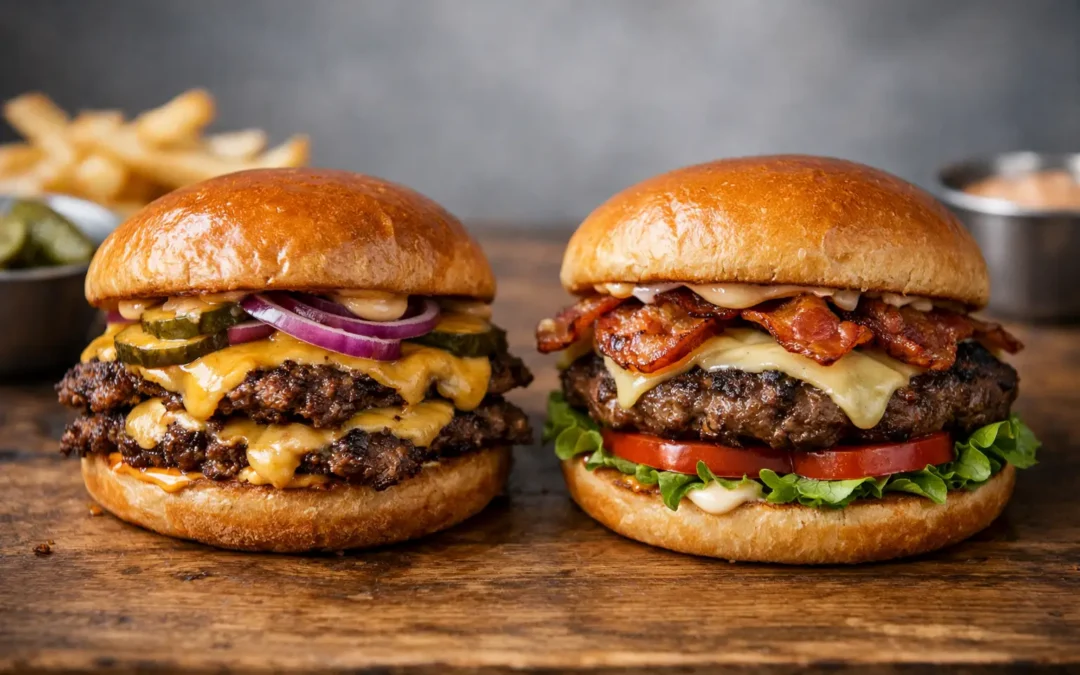
A burger can be thin, greasy in the best possible way, stacked with pickles, and still spark a real debate at the table. The smash burger versus tavern burger question comes down to more than patty size. It is about technique, texture, toppings, and whether you want every bite to crackle at the edges or settle in with a thick, classic pub-style chew.
Both belong in a good brewpub lineup. Both can carry melted cheese, a soft bun, and enough sauce to make napkins necessary. But they deliver two distinctly different burger experiences. Here is how to tell them apart and how to choose the right one for your appetite.
What Makes a Smash Burger a Smash Burger?
A smash burger starts with a loose ball of ground beef placed on a very hot flat-top or griddle. The cook presses it firmly and quickly into the cooking surface, creating a thin patty with maximum contact against the heat. That move is where the name comes from, and it is also where the magic happens.
The beef develops a deeply browned crust through the Maillard reaction, the process that turns high heat, meat proteins, and natural sugars into savory flavor. A well-made smash burger is not merely a thin burger. It should have lacy, caramelized edges, a crisp exterior, and a juicy center that stays tender rather than dry.
Because the patties are thin, smash burgers are often served as doubles. Two patties create more browned surface area, more cheese-to-beef coverage, and a bigger bite without the heavy, meatloaf-like feel of one oversized patty. It is a burger built for crust lovers.
The texture is the main event
The defining character of a smash burger is contrast. The edges bring crunch and concentrated beef flavor, while the center stays rich and juicy. Cheese melts directly onto the patty, filling in the ridges and holding the layers together.
Toppings usually stay focused. Pickles add acidity. Onions provide a sharp or sweet bite. A tangy house sauce cuts through the richness. Shredded lettuce can bring freshness, but the burger is not asking for a towering pile of ingredients. Too much bulk can hide the crust that makes it special.
A soft potato roll or brioche-style bun tends to work well because it compresses easily around the thin patties. The whole burger should feel cohesive, not like a balancing act that falls apart halfway through lunch.
Why the griddle matters
You can cook a burger on a grill and make it delicious, but a true smash burger needs a flat, ripping-hot surface. Grill grates leave distinct char lines and allow fat to drip away. A griddle keeps the patty in direct contact with the heat and lets it cook in its own rendered beef fat.
Timing matters, too. The patty is pressed once at the beginning, not repeatedly flattened while it cooks. Constant pressing pushes juices out. A quick smash creates the crust, then the burger needs a moment to brown properly.
What Is a Tavern Burger?
A tavern burger is more of a broad pub tradition than one locked-in recipe. It usually refers to a heartier, thicker burger served in a casual bar or tavern setting. Depending on the menu, it may be hand-formed, grilled, griddled, or cooked on a charbroiler. The common thread is a substantial patty and a build that feels like a full meal.
Where a smash burger chases crisp edges, a tavern burger often puts its focus on a juicy interior, a thicker beef bite, and generous toppings. You may find bacon, sautéed mushrooms, grilled onions, pepper jack, blue cheese, barbecue sauce, or a fried egg on the menu. The burger is often designed around a particular combination of flavors, not just the patty itself.
This does not mean tavern burgers lack browning or flavor. A great one still needs a good sear and proper seasoning. The difference is that its thicker profile creates less browned surface area per bite. In return, it offers more room for a pink or medium interior when cooked to that preference.
The pub-style advantage
A tavern burger can handle a bigger, messier build. A sturdier bun, such as a sesame roll, pretzel bun, or toasted brioche, helps support the weight. Larger tomato slices, leafy lettuce, onion rings, avocado, and bold sauces all make sense here because the thicker patty has enough presence to stand up to them.
It is the burger to order when you are hungry enough to make a project of it. There is more chew, more structure, and often more variation from one menu to the next. One tavern burger might lean smoky and bacon-heavy; another might be dressed with local green chiles and pepper jack for a Colorado-friendly kick.
The trade-off is speed and consistency. A thick patty takes longer to cook than a thin smashed one, and it is easier to overcook if the timing is off. When done well, though, a tavern burger delivers the kind of satisfying, two-handed meal that has kept pub menus relevant for generations.
Smash Burger Versus Tavern Burger: The Key Differences
The quickest way to compare a smash burger versus tavern burger is to think about what you want the beef to do. If you want crisp, browned edges in nearly every bite, go smash. If you want a thicker, juicier center with room for a more elaborate topping lineup, go tavern.
A smash burger is generally thinner, faster-cooking, and best made on a flat-top. Its flavor is driven by caramelization. It often comes as a double and works especially well with American cheese, pickles, onions, and a simple sauce.
A tavern burger is generally thicker, more customizable, and more likely to be the centerpiece of a loaded pub plate. Its flavor is driven by the beefy interior plus the toppings and cooking method. It can be cooked on a grill or griddle, and it invites bolder combinations.
Neither is automatically better. Calling a smash burger superior because it has more crust misses the point if what you really want is a medium-cooked patty with bacon, mushrooms, and Swiss. Calling a tavern burger more substantial also misses the point if two crisp smashed patties with melted cheese are exactly the meal you came for.
Which Burger Fits Your Beer?
Beer pairing can make the choice easier. The salty, caramelized edges of a smash burger are especially good with clean, refreshing styles. A lager can reset your palate between rich bites, while a blonde ale or cream ale keeps the meal light and easygoing. A hop-forward IPA can work, too, particularly when the burger includes pickles, onions, or a sharper sauce that can meet the beer’s bitterness.
Tavern burgers often welcome bigger beers because their toppings add more intensity. A bacon-and-barbecue build can stand up to a malty amber or stout. A chile-and-pepper-jack burger may call for a crisp lager that cools the heat, or an IPA that plays up the pepper’s bite. There is no need to follow pairing rules like they are law, but matching beer weight to burger weight is a good place to start.
At South Park Brewing, a signature smash burger and a fresh pour make a strong case for keeping things simple: good beef, a hard sear, cold beer, and a table full of people who came hungry.
Order for the Moment, Not the Category
Choose a smash burger when you want something fast, crispy, salty, and deeply savory. It is a natural fit for a casual pint after work, a game-day table, or a takeout order that needs to travel without turning into an overstuffed tower.
Choose a tavern burger when you want the burger to be the whole occasion. It works for a long lunch, a hearty dinner, or those nights when extra toppings sound less like an option and more like a requirement.
The best choice is the one that matches your mood, your beer, and your appetite. If you are still undecided, follow the edges: crave the crunch, order the smash; crave the stack, order the tavern.