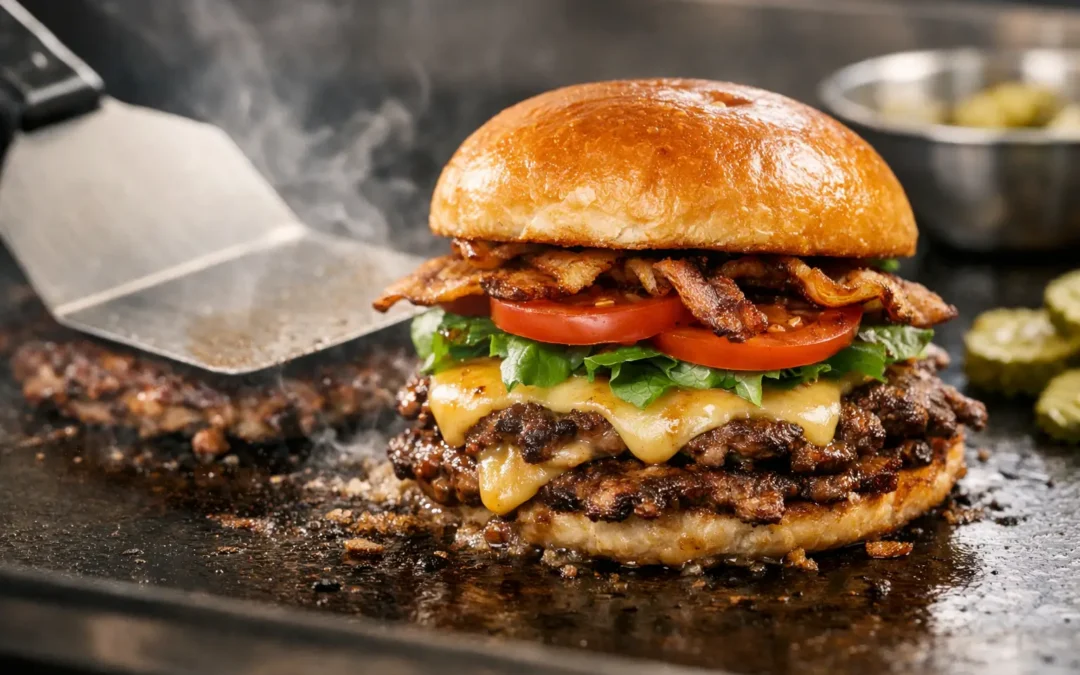
That first bite answers the question fast: why are smash burgers crispy? It comes down to a thin patty, hard contact with a hot griddle, and just enough fat to build a browned, crackly crust before the inside dries out. When it’s done right, you get the best part of a burger on almost every edge – deep browning, lacy bits, and that rich beef flavor that stands up beautifully next to a cold beer.
Smash burgers are not crispy because they’re overcooked. That’s the common misunderstanding. They’re crispy because the cooking method is built to maximize browning on the outside while keeping the cook time short enough that the center still has some juiciness. It’s a fast, high-heat style, and the payoff is texture.
Why are smash burgers crispy in the first place?
The real reason is surface area. A traditional thick burger has less of its meat touching the hot cooking surface. A smash burger gets pressed thin right after it hits the griddle, so a much larger portion of the beef makes direct contact with the heat.
That contact is where the magic happens. The meat browns quickly through the Maillard reaction, which is the process that creates those savory, deeply roasted flavors and the dark crust people crave. You do not need a breading or a batter. You just need beef, heat, and contact.
A smash burger also cooks fast enough that the outside can get crisp before the inside completely dries out. That balance matters. If the griddle is hot enough and the patty is thin enough, the edges start to frill and crisp while the center finishes in a minute or two.
The four things that create the crust
If you want to know why one smash burger comes out beautifully crisp and another turns gray and soft, look at four variables: heat, pressure, fat, and timing.
Heat has to be high
A smash burger wants a seriously hot cooking surface. If the griddle or flat top is only moderately hot, the meat releases moisture faster than it browns, and that moisture starts steaming the surface. Steamed beef does not crisp well.
High heat helps evaporate surface moisture fast and gives the proteins and sugars in the beef a chance to brown. That is what creates the crust instead of a pale, soft exterior. Cast iron works well at home for the same reason – it holds heat and keeps the surface temperature more stable when cold meat hits the pan.
Pressure matters, but only at the start
The smash itself is not about squeezing out juices for the entire cook. It’s about creating full, even contact with the hot surface right away. Pressing the ball of beef during the first few seconds spreads it thin and maximizes browning.
After that, keep pressing and you start losing the benefit. Too much repeated smashing can push out fat and moisture you actually want in the finished burger. The goal is one firm smash up front, not a wrestling match on the griddle.
Fat helps flavor and texture
Smash burgers work best with beef that has enough fat to brown well and stay flavorful. Lean beef can still cook, but it usually won’t deliver the same rich crust or juicy bite. A little fat renders out, fries the surface, and boosts that crisp edge.
This is one of those places where balance matters. Too little fat and the burger can turn dry and tight. Too much fat and you can get flare-up-style messiness or greasy results, especially on home equipment. Around the classic burger range tends to work best.
Timing is everything
A smash burger is not patient food. Once it hits the griddle and gets smashed, the clock moves quickly. Leave it alone long enough to brown properly, then flip it. Flip too early and the crust tears. Wait too long and the thin patty goes from crisp to dry.
That short window is why a great smash burger feels so dialed in. There is not much room for lazy timing, but when it’s right, the texture is hard to beat.
Moisture is the enemy of crispiness
One of the biggest reasons burgers fail to crisp is excess moisture. Wet meat, a crowded cooking surface, or too-cool equipment all create steam. Steam softens the exterior and fights browning.
That is also why loosely packed beef usually performs better than a dense, overworked patty. If the meat has been compressed too much before it even hits the grill, it can cook up tighter and release moisture in a less helpful way. Starting with a loosely formed ball gives you a better smash and a better crust.
Seasoning plays a role too. Salt is essential, but when you salt too early, it can start drawing moisture out of the meat before cooking. That is not always a disaster, but for a smash burger, seasoning at the right moment helps preserve the conditions that favor browning.
Why the edges get extra crispy
The edges are where smash burgers really earn their reputation. When the beef spreads thin, little ridges and irregular bits form around the perimeter. Those tiny sections cook faster than the center and can become lacy and crackly.
That contrast is part of the appeal. The center gives you beefy richness and melted cheese, while the outer ring brings crunch and concentrated flavor. Thick burgers can be juicy and satisfying, but they usually do not give you that same ratio of crust to bite.
This is one reason smash burgers feel so snackable, even when they’re substantial. Nearly every bite includes some crisp texture.
Why smash burgers taste bigger than they are
Crispiness is not just about texture. It changes flavor. Browning creates deeper savory notes, a touch of bitterness in a good way, and the kind of grilled richness people often describe as “more beefy,” even when the patty itself is relatively thin.
That means a smash burger can taste bold without being oversized. The crust does a lot of work. Add cheese, a soft bun, maybe pickles or onions for contrast, and suddenly a simple burger eats like a complete, balanced thing rather than just a thick slab of meat.
That’s also why smash burgers pair so well with beer. The crisp edges and browned beef hold up against hops, roasted malt, or the clean snap of a lager. The burger brings texture and salt, the beer clears the palate, and the next bite tastes as good as the first.
Why are smash burgers crispy at restaurants more often than at home?
Usually, it’s the equipment. Commercial flat tops hold steady heat better than most home pans, and that consistency makes a huge difference. A restaurant can drop multiple patties, keep the surface ripping hot, and get the same crust again and again.
At home, the pan may lose heat after the first burger. People also tend to move the meat too soon, press too long, or use patties that are too big for the pan. None of those mistakes are fatal, but they soften the crust.
Ventilation also changes behavior. In a restaurant kitchen, cooks can let the griddle stay hot and aggressive. At home, people often back off the heat because the smoke gets intense. Fair enough – but lower heat usually means less browning.
The trade-off: crispy can become dry
This is the part worth saying clearly. The same method that creates crispiness can also overcook the burger if it is not handled carefully. Thin patties have less margin for error. A beautiful crust can become a dried-out sheet of beef if the timing slips.
That is why smash burgers are best when they’re simple and fast. Thin beef, hot surface, firm smash, clean flip, done. They are not improved by fussing over them for too long.
And while smash burgers are famous for crisp edges, not everyone wants maximum crunch. Some people prefer a slightly thicker smash with a bit more tenderness in the middle. That is a perfectly good call. Crispiness is part of the appeal, not a rule that has to overpower everything else.
The bottom line on crispy smash burgers
If you’ve ever wondered why a smash burger feels more craveable than a standard burger, the answer is that crust changes everything. The burger cooks thin, the beef makes full contact with a hot surface, the edges frill and brown, and the flavor gets bigger with every bit of caramelization. That’s the whole game.
At South Park Brewing, that balance is exactly why smash burgers belong in a brewpub lineup. They’re straightforward, packed with flavor, and built for the kind of meal that keeps a table happy. Next time you bite into one and hear that little crunch at the edge, you’ll know it’s not luck. It’s heat, timing, and a cooking style that knows exactly what it’s trying to do.
A great smash burger does not need tricks. It just needs a hot griddle, good beef, and enough confidence to let the crust happen.