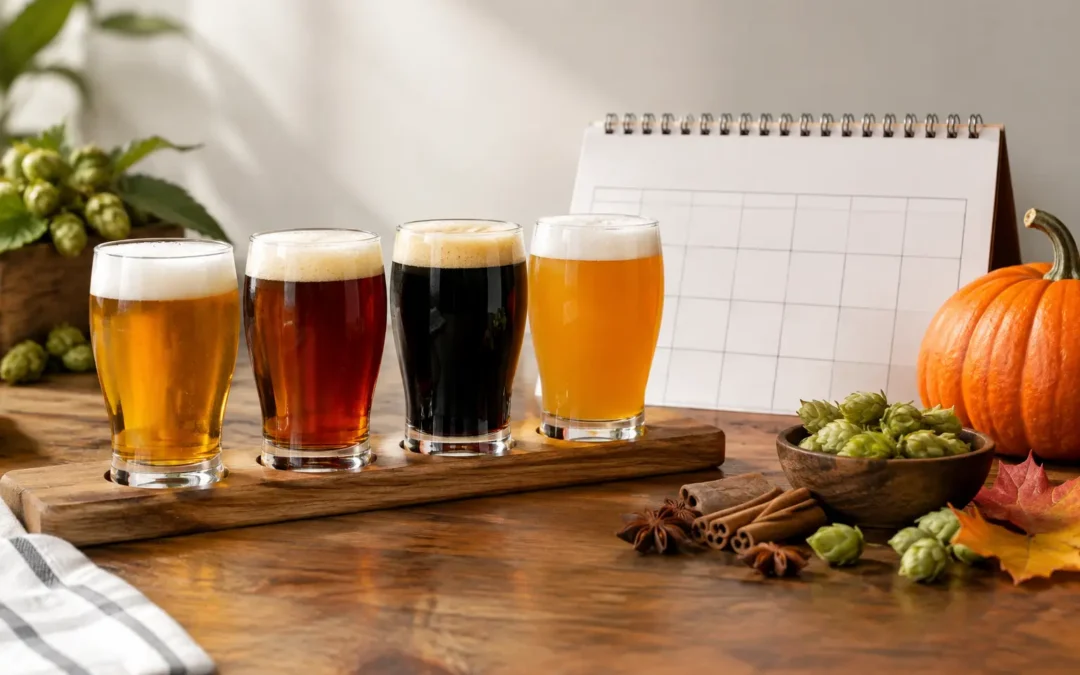
A crisp lager can feel perfect in July, but most beer drinkers still start looking for Oktoberfest as late summer approaches. That anticipation is part of the fun. If you have ever wondered when do breweries release seasonals, the short answer is: earlier than the season on the calendar. The better answer is that timing follows brewing schedules, ingredient availability, distributor needs, weather patterns, and the way people actually gather around a pint.
Seasonal beer releases are not just a way to change the tap list. They give brewers a chance to build flavors around a moment: patio weather, football weekends, holiday parties, the first cold snap, or those bright Colorado afternoons that make a lighter beer sound just right.
When Do Breweries Release Seasonals?
Most breweries release seasonal beers four to eight weeks before the season they represent. That gives a beer time to find its audience before the holiday or weather shift arrives. A fall beer may land in August, a winter warmer might show up in October or early November, and a spring release can arrive while there is still snow on the ground.
For a brewery, releasing early is practical. Beer takes time to brew, package, distribute, and get onto shelves or draft lines. It also lets customers enjoy the beer across the full seasonal window rather than finding it for the first time when the season is almost over.
For drinkers, that early arrival can feel strange at first. Pumpkin beer beside summer cookout food? A dark, spiced ale while the patio is still busy? But seasonal releases are tied to the beer calendar, not a single day on the weather app.
Spring seasonals: February through April
Spring beers often begin appearing in late winter, usually from February into April. Think crisp pilsners, blonde ales, kölsch-style beers, wheat beers, pale ales, and fruit-forward sours. These are made for the return of longer afternoons and the first chance to trade heavy winter food for something brighter.
In Colorado Springs, spring is also a moving target. One weekend can call for sunglasses and a patio table; the next can bring a sharp cold front. That is why breweries often keep a mix of easy-drinking lagers and fuller-bodied options on tap through the transition. A spring seasonal does not have to be delicate. It just needs to feel fresh.
Summer seasonals: April through June
Summer releases commonly start arriving in late spring. By April, May, or June, breweries are pouring beers meant for warm days, cookouts, ballgames, and long catch-ups with friends. Light lagers, Mexican-style lagers, radlers, wheat ales, session IPAs, cream ales, and tart fruited beers all fit naturally here.
The key word is drinkability. That does not mean flavorless. A well-made summer beer can have citrus, grain character, gentle hop aroma, or a clean snap of acidity. It simply should leave you ready for another sip, especially if there is a smash burger, a basket of fries, or a second round on the table.
Some breweries also use summer to release bigger IPAs or specialty ales, especially for festivals and anniversary celebrations. Seasonality is a guide, not a rule. A double IPA can absolutely belong on a June tap list if that is what the crowd wants.
Fall seasonals: July through September
Fall beers arrive earlier than any other major seasonal category. Many breweries begin releasing them in July or August, with Oktoberfest lagers, märzens, harvest ales, fresh-hop beers, amber ales, and pumpkin beers leading the charge. These releases need a long runway because fall beer fans are enthusiastic and the window moves fast.
Oktoberfest beer is a great example of why timing matters. Traditional märzen-style lagers require a longer fermentation and conditioning process than many ales. A brewery needs to plan well ahead if it wants that smooth malt profile ready for late-summer events and September celebrations.
Fresh-hop beers are even more time-sensitive. They are built around hops used shortly after harvest, usually in late summer or early fall. Their release depends on when the crop is ready and how quickly the brewery can brew with it. If you see a fresh-hop beer on the board, do not assume it will be there next week. Those bright, green, just-picked hop notes are a short-season experience.
Winter seasonals: October through December
Winter seasonals usually begin pouring in October and continue through December, sometimes into January. This is the home of stouts, porters, winter warmers, strong ales, spiced beers, dark lagers, barrel-aged releases, and holiday one-offs.
Not every winter beer needs cinnamon, clove, or a big ABV. A clean dark lager or a chocolatey stout can be just as seasonal as a spiced ale. The common thread is comfort: richer malt, deeper roast, warming strength, or flavors that pair well with holiday meals and cold evenings.
The trade-off is that some big winter beers need extra cellar time. A barrel-aged stout may be planned months or even years in advance. That makes its release date less about the first frost and more about when the beer is finally tasting right.
Why the Seasonal Beer Calendar Changes
A brewery’s seasonal release schedule is rarely fixed forever. Weather can change demand. A popular beer may sell out faster than expected. A hop crop can vary, a tank can be occupied longer than planned, or a brewer may decide a beer needs another week to fully come together.
Local events matter, too. A brewery may time a release around a community festival, a taproom anniversary, a game-day weekend, or the start of patio season. In a brewpub, the kitchen can also influence the decision. A bright lager might be the right partner for a lighter seasonal menu, while a roasty porter can make a cold-night burger run feel even better.
That flexibility is a good thing. It means the beer is released when it is ready, not because a calendar says it has to be. The best seasonal programs have a rhythm customers can recognize without becoming so rigid that the tap list loses its personality.
How to Catch Limited Seasonal Releases
The first pour is often not the only chance to try a seasonal, but waiting too long is still risky. Limited batches can move quickly, particularly fresh-hop beers, barrel-aged beers, collaboration releases, and anything connected to a holiday weekend.
Your best move is to pay attention to a brewery’s current tap list and release updates before making plans. If a beer catches your eye, ask the staff how long it is expected to last. They will not always be able to promise a date, but they can often tell you whether a keg just went on, whether more is coming, or whether you should order it while you can.
It also helps to try a new release in the setting it was designed for. Split a flight with friends if you are curious about several styles. Pair a clean lager with something salty and savory. Save the high-ABV stout for a slower visit. Seasonal beer is more memorable when it becomes part of the occasion instead of just another item checked off a list.
What to Expect From a Colorado Brewery
Colorado breweries have plenty of room to play with the usual seasonal schedule. Our weather can turn fast, our outdoor culture stretches across much of the year, and local beer drinkers are willing to try everything from a simple cream ale to a bold imperial IPA. That often leads to tap lists where a sunny-day sipper and a dark, warming beer coexist without apology.
At South Park Brewing, that spirit means there is always a reason to come back, whether you are in the mood for a familiar favorite or a fresh seasonal pour alongside a signature smash burger. The exact release date may shift, but the fun is in catching the next beer at the right moment – preferably with good food and good company already at the table.
Seasonal beer rewards a little curiosity. Watch for the changeover, ask what is new, and order the pint that fits the day you are having, not just the month on the calendar.