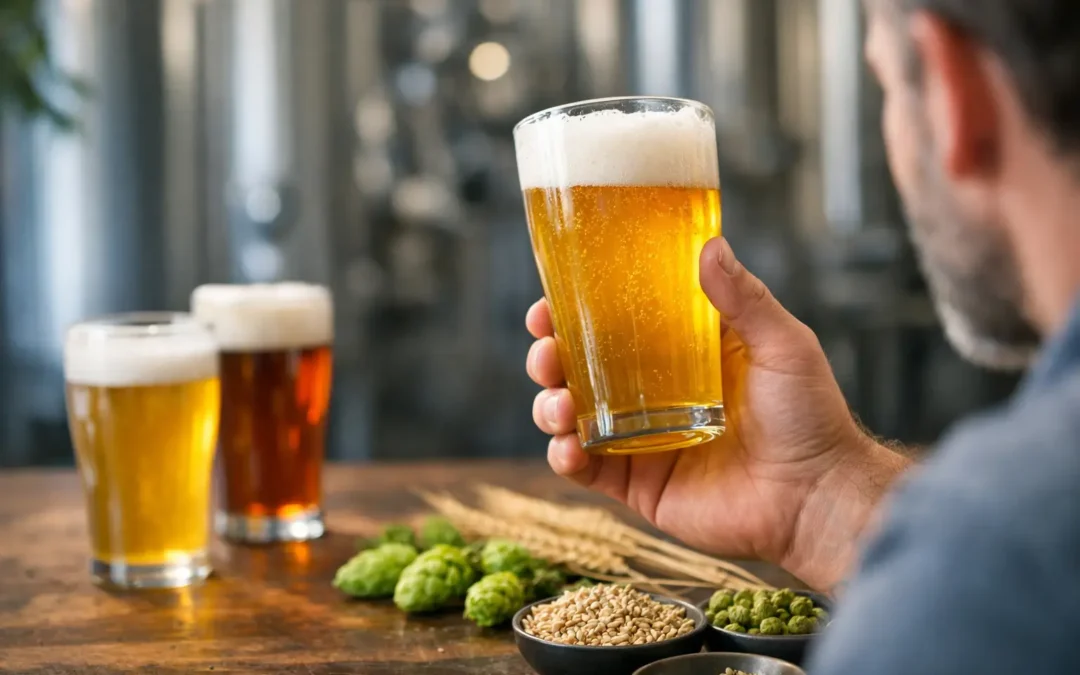
A great beer should taste like the brewer planned it: bright hops in an IPA, clean malt in a lager, rich roast in a stout, or lively tartness in a sour. Knowing how to identify fresh beer helps you get that intended experience, whether you are grabbing a can from the cooler, ordering a draft, or stocking up for a backyard get-together.
Freshness is not one single rule for every style. A hop-forward pale ale and a barrel-aged imperial stout can both be excellent, but they are on very different timelines. The trick is learning what to look for, then matching your expectations to the beer in your hand.
Start With the Packaged-On Date
The clearest clue is a packaged-on, canned-on, or bottled-on date. This tells you when the beer entered its container, which is more useful than a vague best-by date when you want to judge freshness yourself.
For many IPAs, pale ales, pilsners, blonde ales, wheat beers, and other lighter styles, sooner is generally better. Hop aroma fades over time, and the crisp, snappy character that makes these beers so refreshing can soften after a few months. A local IPA that was packaged recently should smell expressive and taste lively, not sleepy.
That does not mean every beer gets worse with age. Bigger, malt-driven beers such as imperial stouts, barleywines, strong ales, and some Belgian-inspired styles may develop well over months or even years when stored correctly. Their flavors can become smoother, deeper, and more integrated. Still, aging is intentional. An old beer is not automatically a cellar beer.
If there is no date on the package, look for a lot code near the bottom of the can, on the neck of the bottle, or on the carton. Those codes are not always easy to decode, but a retailer or brewery may be able to help. When in doubt, choose a package with a clearly printed date over one that leaves you guessing.
Check How the Beer Was Stored
Fresh beer can lose its edge long before its date if it has been stored poorly. Heat, light, and oxygen are the usual troublemakers.
Cans are great at blocking light, but they still do best when kept cold and out of direct sun. Bottles need even more care. Green and clear glass allow more light through than brown glass, which can create a skunky aroma in hop-forward beers. That smell is not a quirky flavor note. It is a sign the beer has had too much light exposure.
At a store, look for beer kept in refrigerated cases, especially if you are buying styles known for bright hop character. Cold storage slows flavor changes. Beer sitting warm under bright lights may still be drinkable, but it is less likely to taste as vivid as the brewer intended.
At home, refrigerate beer you plan to enjoy soon. Keep special bottles meant for aging somewhere cool, dark, and temperature-stable. A hot garage, sunny kitchen shelf, or car trunk can do real damage in a hurry, particularly during a Colorado summer.
Use Your Eyes Before the First Sip
A quick visual check can reveal a lot, although appearance depends heavily on style. Hazy IPAs are supposed to look cloudy. A filtered lager usually should not. A bottle-conditioned saison may have sediment, while a bright cream ale should pour clearer.
Start with the package. Avoid cans that are swollen, leaking, deeply dented along the seam, or badly corroded. A small cosmetic dent is usually no big deal, but damage around a can’s top, bottom, or side seam can compromise the seal.
Once poured, notice the foam and carbonation. A fresh draft beer should usually arrive with a proper head for its style, though the exact amount varies. Flat beer, huge coarse bubbles that vanish immediately, or a completely lifeless pour can point to an issue with age, packaging, or draft handling.
Cloudiness that does not belong is another clue. If a beer that is normally clear looks unexpectedly murky, or if it has unusual floating material, do not assume it is part of the recipe. It could be harmless yeast, but it can also indicate a quality problem. Ask before drinking if you are at a taproom or restaurant.
Smell for Brightness, Not Just Strength
Your nose often catches a freshness issue before your palate does. Give the beer a gentle swirl and take a few short sniffs. You are looking for aromas that fit the style and feel clean, inviting, and connected to the beer’s ingredients.
Fresh IPA aroma might suggest citrus, pine, tropical fruit, melon, or fresh-cut herbs. A fresh stout may bring coffee, cocoa, toast, or dark fruit. A lager might smell subtle, lightly bready, floral, or crisp. Aroma does not need to be loud to be fresh. It needs to make sense for that beer.
Watch for papery, wet-cardboard, stale-cracker, sherry-like, or dull honey notes in beers that are meant to be crisp or hop-forward. These can signal oxidation, which happens when beer has too much contact with oxygen over time. In some strong, intentionally aged beers, a touch of sherry-like complexity may be welcome. In a six-week-old IPA, it is a disappointment.
A skunky smell, similar to cannabis or a struck match, often points to light damage. Sour, buttery, vinegar-like, or medicinal aromas may also be signs that something went wrong, unless those characteristics are specifically part of the beer’s style and recipe.
Taste the Beer in Context
One sip is enough to tell you whether a beer feels alive. Fresh beer has definition. The bitterness, malt, fermentation character, carbonation, and finish should work together instead of landing in separate, confusing layers.
In hop-forward beer, stale flavors often show up as muted fruit character followed by a harsh, lingering bitterness. The beer may taste sweet and tired rather than bright and balanced. In lighter lagers and blonde ales, freshness often reads as a clean finish. If the beer tastes dull, oddly sweet, or papery, it may be past its prime or poorly stored.
For dark beer, do not confuse rich flavor with old flavor. Chocolate, roast, caramel, molasses, and warming alcohol can be completely appropriate in a stout or strong ale. What you do not want is a flavor that seems flat, sour when it should not be, stale, or strangely thin.
Temperature matters here, too. Beer served ice-cold can hide aromas and flaws. As it warms slightly, more character comes through. If a beer tastes bland at first, give it a few minutes. If it gets worse as it warms, that is useful information.
Draft Beer Has Its Own Freshness Test
Draft beer can be exceptionally fresh because it moves from keg to glass without sitting in a package. But quality depends on more than the keg date. Clean lines, proper gas pressure, correct serving temperature, and regular tap maintenance all matter.
A fresh draft should pour with appropriate carbonation and smell clean. It should not taste metallic, buttery, sour, or oddly soapy unless the style calls for a related note. If several different beers from the same tap system share the same off flavor, the issue may be in the line rather than the brewery.
The good news is that a quality-focused brewpub has every reason to protect its draft program. Beer tastes better, guests come back, and the food pairing works the way it should. A crisp lager with a smash burger or a rich stout alongside something savory is a much better experience when the pour is on point.
Ask a Simple Question
You do not need to be a certified beer judge to make a good call. At a taproom, ask what is freshest, what was just released, or which beer is drinking especially well right now. At a store, ask when they received a shipment or whether they rotate older inventory.
Those questions are not fussy. They show you care about the product, and good beer people are usually happy to point you toward the right can, bottle, or draft pour. If you are trying a new style, ask what it should taste like. That context makes it much easier to spot a beer that is performing as intended.
Fresh beer is not about chasing the newest date at all costs. It is about respecting the style, storage, and brewer’s purpose. Trust the date, use your senses, and choose places that treat every pour like it deserves to be enjoyed at its best.