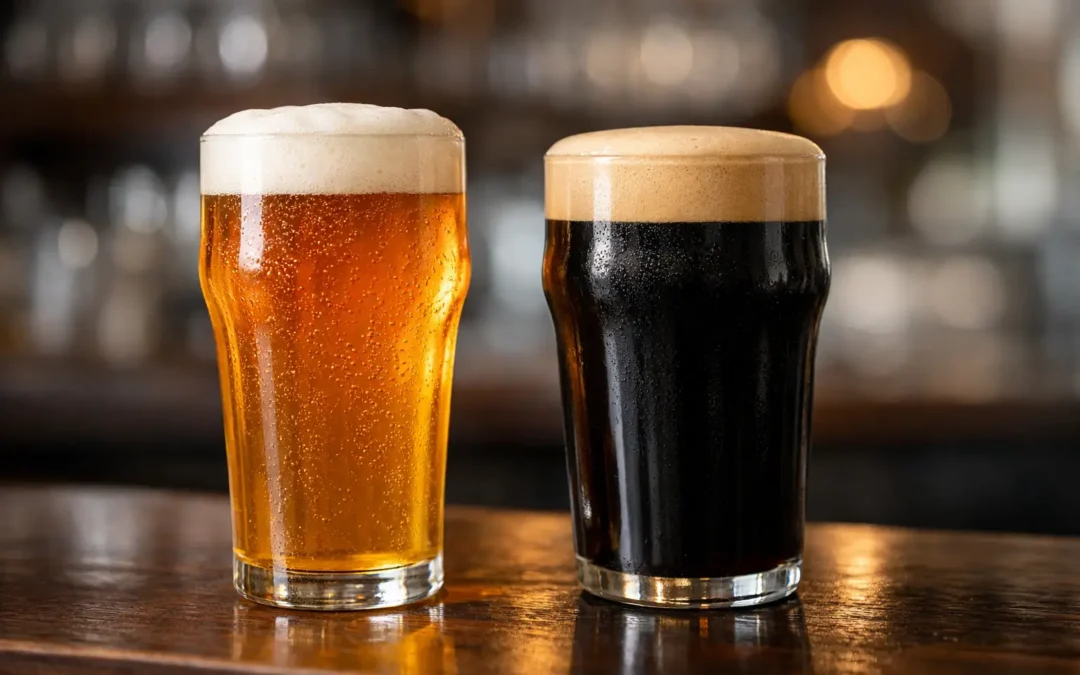
The choice between an imperial IPA versus stout is not really about light beer versus dark beer. It is a choice between two big, expressive styles that bring plenty of flavor and often plenty of strength. One puts hops front and center with citrus, pine, tropical fruit, or resin. The other leans into malt with roast, chocolate, coffee, dark fruit, and a fuller feel. Both can make a great first pour, but they suit different cravings, foods, and moments around the table.
Imperial IPA Versus Stout: The Core Difference
An imperial IPA is a stronger, more intense version of an India pale ale. Brewers use a generous amount of hops during the boil and later in the process to build bitterness, aroma, and flavor. The result may smell like orange peel, mango, grapefruit, peach, fresh herbs, pine needles, or even a little dank resin. Its color can range from golden to deep amber, and its body is usually medium to full.
A stout begins with darker malts. Those grains are roasted in a way that creates flavors people often associate with coffee, cocoa, toasted bread, caramel, char, or bittersweet chocolate. Stouts are typically dark brown to black, but color alone does not tell you how heavy or sweet one will be. Some are dry and crisp. Others are rich, silky, and dessert-like.
The simplest way to think about the matchup is this: imperial IPA is hop-driven intensity, while stout is malt-driven depth. Neither is automatically stronger, sweeter, or more filling. Style variations and the brewer’s recipe matter just as much as the name on the tap list.
Flavor: Bright Hop Punch or Roasted Depth?
Imperial IPAs often arrive with an immediate aromatic hit. Before the first sip, you may pick up fruit, citrus zest, floral notes, or evergreen character. Bitterness can be firm, though many modern imperial IPAs balance that bitterness with a soft, juicy hop profile and a touch of malt sweetness. The finish may be dry and lingering, inviting another sip even when the beer is high in alcohol.
Stouts trade that bright hop perfume for deeper, warmer flavors. A classic dry stout may have a clean roast character and a snappy finish. An oatmeal stout may feel smoother and creamier. A milk stout can bring sweetness and soft chocolate notes, while an imperial stout can layer molasses, espresso, dark fruit, vanilla, and warming alcohol into one slow-moving pour.
If you enjoy black coffee, dark chocolate, toasted marshmallow, or a rich brownie edge, stout is usually a natural fit. If your ideal flavor leans toward grapefruit, pineapple, peach, citrus candy, or a West Coast piney bite, imperial IPA has your name on it.
Bitterness Means Different Things Here
Both beers can be bitter, but the bitterness lands differently. In an imperial IPA, bitterness comes primarily from hops. It can feel sharp, zesty, resinous, or pleasantly drying. In a stout, bitterness often comes from roasted grain, giving the beer a coffee-like, cocoa-powder character rather than a citrusy snap.
That distinction helps when someone says they do not like bitter beer. They may dislike one type of bitterness but enjoy the other. A person who turns away from a pine-forward IPA might love a smooth chocolate stout. Someone who finds roast too heavy may find a juicy imperial IPA surprisingly refreshing.
Strength, Body, and Drinking Pace
Imperial IPAs and imperial stouts commonly land around 7% to 12% ABV, though there are plenty of exceptions. That means either style deserves a little respect. The flavor can hide the alcohol, especially when a beer is sweet, silky, or loaded with fruit-forward hops.
Their drinking experience differs, though. An imperial IPA can feel lighter on its feet than its ABV suggests because carbonation and hop brightness keep the palate moving. It works well when you want a bold beer that still has energy. A stout often feels more contemplative, especially as it warms slightly in the glass. Its roast, sweetness, and thicker body can make one pour feel like a complete experience.
Season matters, but it is not a rule. A crisp, dry stout can be excellent on a Colorado Springs patio, and a bright imperial IPA can hit the spot on a cold evening. Go by your appetite and the flavor you want, not the weather forecast alone.
Food Pairings That Make Each Style Better
Big beers shine when food gives them something to play against. Imperial IPAs are a smart match for salty, spicy, rich foods. Their carbonation cuts through grease, while hop flavor brings contrast to heat and savory seasoning. Think crispy wings, loaded fries, spicy tacos, sharp cheddar, or a smash burger with plenty of onions and pickles.
Stouts work especially well with char, smoke, and caramelized flavors. A burger with bacon, mushrooms, or a dark, savory sauce can pull out the stout’s roast notes. Barbecue, brisket, smoked meats, blue cheese, and chocolate desserts are also natural partners. A sweeter stout can take the place of dessert, while a dry stout can clean up a bite of rich food without overwhelming it.
There is room for crossover. A citrus-forward imperial IPA can be great with a burger, and a stout can stand up beautifully to a peppery plate. The better question is whether you want your beer to brighten the food or echo its richness. Choose an imperial IPA for contrast. Choose a stout when you want the flavors to meet in the middle.
How to Order When You Are Not Sure
Start with the flavor you want in the next ten minutes, not the style you think you are supposed to like. If you want something aromatic, lively, and hop-forward, ask for the imperial IPA. If you want something roasted, smooth, and more malt-centered, reach for the stout.
A few details can narrow it down fast. Ask whether the IPA is hazy and juicy or clear and piney. Ask whether the stout is dry, sweet, creamy, or barrel-aged. Those answers tell you much more than color ever will.
If you are new to higher-ABV beer, consider a smaller pour or enjoy it alongside food. That is not a lesser experience. It is often the best way to taste the details without rushing past them. Sharing tastes with friends is another easy way to compare styles and find a new favorite.
When an Imperial IPA Is the Better Call
Choose an imperial IPA when you want a beer that feels bright and expressive, especially with savory food or a lively table. It is a strong pick for hop fans who want more aroma, more flavor, and more presence than a standard IPA. It can also win over drinkers who assume all strong beer has to be dark and heavy.
Be aware that some imperial IPAs can be aggressively bitter, and their alcohol can sneak up quickly. If bitterness is not your thing, look for descriptors such as juicy, hazy, tropical, soft, or fruit-forward. If you love a sharper edge, piney, resinous, dank, and West Coast are useful words to spot.
When a Stout Is the Better Call
Choose a stout when you want depth, roast, and a more relaxed drinking pace. It is the pint for lingering over a meal, settling into a conversation, or satisfying that craving for coffee-and-chocolate flavor without ordering dessert first.
Stout is not one-size-fits-all. A dry stout can be surprisingly easygoing, while an imperial stout may be rich enough to split or savor slowly. If you prefer less sweetness, ask for dry, classic, or coffee-forward. If you want a fuller dessert feel, look for oatmeal, milk, pastry, or barrel-aged versions.
At South Park Brewing, the best choice is the one that makes your food, your company, and your night better. Order the imperial IPA when you want the hops to bring the spark. Order the stout when you want the malt to bring the comfort. Either way, take a moment with the first sip, then let your own palate make the call.