A beer you loved on tap last weekend can be gone by Thursday, while a fresh seasonal release may be waiting just a few blocks from your usual stop. This guide to local beer availability helps you spend less time guessing and more time finding the pint, pack, or style you actually want.
Start With the Kind of Beer Experience You Want
Local beer availability is not one simple question. A brewery may have a beer pouring in its taproom, sold in cans at a nearby liquor store, or available only at a restaurant carrying a guest tap. Those are three different supply chains, and each changes on its own schedule.
If you are meeting friends for burgers and a flight, taproom availability matters most. If you want to stock the fridge before a backyard cookout, look for packaged beer at trusted local retailers. If you are chasing one particular release, a quick check before you leave can save you a disappointing detour.
It also helps to decide how flexible you are. Looking for a crisp lager, a big imperial IPA, or a tart sour ale opens up plenty of options. Looking for one exact beer is a different mission, especially when it is a limited release or a rotating specialty batch.
Guide to Local Beer Availability: Check the Source First
The brewery is usually the best first source for current beer information. Tap lists change quickly, particularly at independent breweries where small batches, seasonals, and taproom-only pours are part of the fun. A printed menu from last month or an old photo from a friend is not a guarantee.
Look for the brewery’s current tap list, recent updates, and beer finder if it offers one. At South Park Brewing, the beer finder is a practical place to start when you want to know whether an offsite retailer may have a particular beer. It is still smart to confirm with the store, since shelf inventory can move fast.
Calling ahead is not overthinking it when you are after something specific. Keep the question simple: Do you have this beer in stock, and is it available in cans, bottles, or on draft? If it is a taproom, ask whether a pour is expected to last through the evening. Staff can often point you toward a close alternative when the beer you wanted has just kicked.
Know Why Availability Changes
Craft beer is made to move. Some beers are available year-round because they have steady demand and a production schedule built around them. Others are brewed for a season, an event, a collaboration, or a one-time idea that sounded too good not to put in a tank.
Draft availability can change fastest. One keg may serve a busy weekend crowd, while another lasts longer on a quiet weekday. Package availability depends on how much beer was canned or bottled, when deliveries went out, and how quickly a retailer sells through its stock.
Distribution area matters, too. A brewery may prioritize its own taproom, then nearby accounts, before sending beer farther into the region. That is not a shortage or a problem. It is often how a local brewery protects freshness and keeps the beer closest to where it was made.
Weather and the calendar can also shape what you find. Warm patios tend to speed up lighter beers, lagers, and approachable ales. Cooler months bring more interest in darker, richer pours. Holidays, game days, festivals, and long weekends can clear out a popular release much faster than normal.
Freshness Matters More Than a Familiar Label
Finding a beer is only half the win. Finding it fresh is the better outcome. For hop-forward beers, especially IPAs, check the packaged-on date when it is available. Fresh beer generally delivers the bright aroma, lively flavor, and clean finish the brewer intended.
That does not mean every beer has the same freshness window. Some stouts, strong ales, and barrel-influenced beers can develop in interesting ways over time. Most pale ales, IPAs, blonde ales, cream ales, and lagers are at their best when they have been stored cold and have not been sitting around longer than necessary.
Retailer care makes a difference. A good local beer shop rotates stock, keeps packages out of direct light, and understands that craft beer is not just another shelf product. If the cans are warm, dusty, or missing any date information, consider choosing a newer package or asking for help.
Use a Simple Search Routine
The fastest beer run starts before you get in the car. Check the brewery’s current updates, then narrow your options by format and neighborhood. If you have a favorite shop, call rather than relying on a search result that may be outdated.
When you are looking for a hard-to-find release, this order usually works well:
- Check whether the brewery currently has it on draft or in packaged form.
- Use a beer finder or current brewery updates to identify likely nearby retailers.
- Call the retailer and ask them to physically confirm the beer and package date.
- Have one or two backup styles in mind before you head out.
That last step keeps the outing enjoyable. If the hazy IPA is gone, maybe a fresh West Coast IPA, pilsner, or pale ale still hits the spot. If a barrel-aged stout sold out, a smooth porter or a seasonal dark ale might be exactly right for the night.
Build Relationships With the Places That Sell Good Beer
The easiest way to find better local beer is to become a familiar face at places that care about it. Bartenders, beer buyers, and package-store staff often know what is arriving soon, what has been especially popular, and which beers are likely to disappear first.
Ask useful questions instead of asking for the best beer. Tell them what you usually enjoy, whether you want something light or bold, and whether you are taking it home or drinking it with dinner. That gives them enough direction to make a recommendation that fits the moment.
For groups, variety is usually the better play. Pick up a mix of familiar easy-drinkers and one or two more adventurous options. A lager or blonde ale can keep the whole table happy, while a sour, stout, or bigger IPA gives the beer fans something to talk about.
Taproom Only Does Not Mean Less Worth Finding
Some of the best local pours never make it into broad distribution. Small pilot batches, experimental recipes, and one-off specialties often stay at the brewery because there is simply not enough volume to package and ship. That is part of what makes a taproom visit worthwhile.
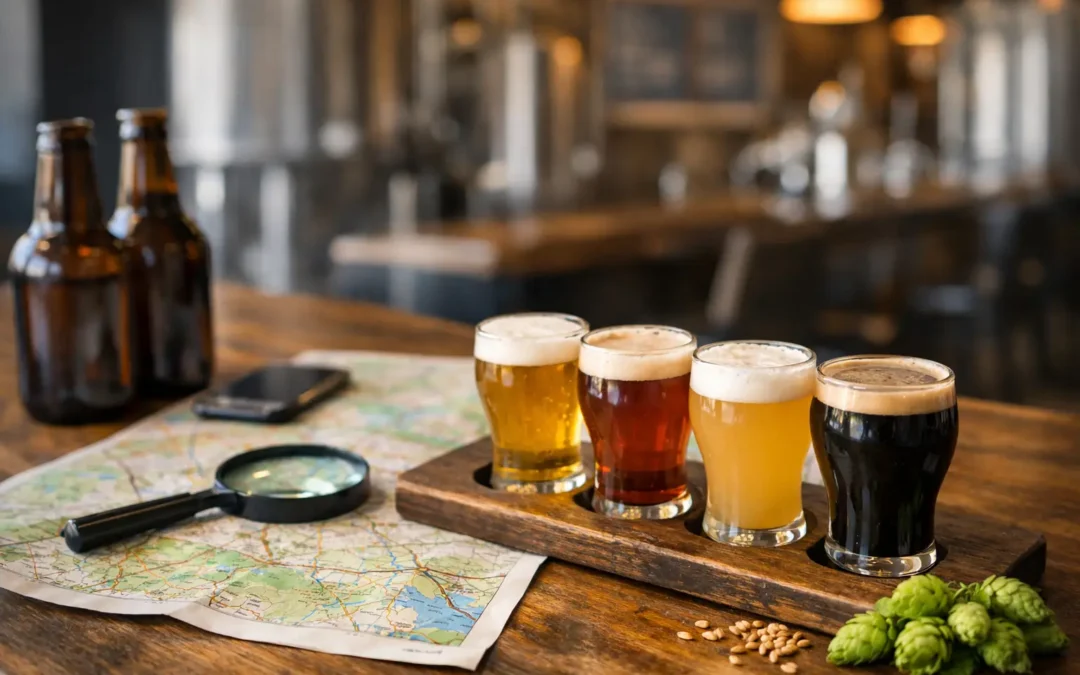
A taproom-only beer is also a good reason to order a flight. You can try a few styles without committing to a full pint, compare notes with your table, and find a new favorite before it disappears. Pairing that flight with food turns a quick beer search into an actual night out.
There is a trade-off, of course. If you need beer for a party, packaged availability is more convenient. If you want the widest range and the freshest possible pour, the brewery is often the better bet. The right choice depends on whether you are planning a fridge restock, a dinner, or a proper local beer outing.
Make Your Next Beer Run More Fun
Treat local beer availability as an invitation to stay curious, not a scavenger hunt that has to end with one exact can. Follow current updates, call when the beer matters, buy fresh, and give the seasonal tap list a chance to surprise you. The best local find may be the beer you came for, or the new pour that makes you plan your next visit before you finish the first one.